Tuesday, December 30, 2025

What should a student learn to become a gentleman?

We have the ancient classical Western liberal arts: 3 language (trivium) and 4 mathematical (quadrivium).
  • Rhetoric
  • Grammar
  • Logic
  • Astronomy
  • Arithmetic
  • Geometry
  • Music

For an alternative take, consider the Chinese 6 arts

  • Archery
  • Chariot
  • Music of China
  • Li (Confucianism)
  • Chinese calligraphy
  • Chinese mathematics
Note that the linked Wikipedia entry for Chinese mathematics is sloppy and tenditious.

Alternatively: 1) Propriety, 2) Music, 3) Archery, 4) Driving, 5) Composition, 6) Mathematics

Among the Persians the virtues were: "Ride, shoot straight, and speak truth"

Hmm. It looks like the trivium/quadrivium has some implicit assumptions about what else the student has learned, easy to spot by comparison with the others. Plato wanted lots of PE, and careful attention to the poetry and music taught to make sure the proper virtues were promoted. Plato's not our best guide, though -- some of his suggestions have been tried and found wanting.

If you replace mere astronomy with introductions to science/technology, and round out the Western liberal arts with the missing Propriety/Philosophy, Driving, and Shooting you get a better base. Add on history and you get someone less easily led astray by fashionable nonsense: more of the ideal gentleman.

How do I do as a gentleman? I like to think that I do fine in "propriety/speaking truth", and in writing and math and science/technology. Music -- not so well, but I do sing in choir sometimes (they're desperate). My driving is still a bit better than average (they taught us courteous driving) but not superb, my shooting is mediocre, and I'm downright lousy in gymnastics or racing.

Great books

The "Great Books" set opens with a volume titled "The Great Conversation", and that's not a bad way to think about such a collection. Recently they've added some non-Western tradition books to the set, but those probably should be their own series: Great Books of China, or Great Books of ... well, maybe not India exactly, since that's more a modern construct, but you get the idea. Until recently each different culture family's conversations have been more internal.

I don't think you'd get quite the same kind of collection from Africa, or the Americas. Africa has oral traditions--a variety of them, not all in communication/conversation with each other. A problem with oral traditions is that if an idea goes out of fashion for a couple of generations, it's lost. Books, though still fragile, are a bit more permanent, and a tradition may be only temporarily lost.

Sunday, December 28, 2025

A star

I don't recall ever having seen any movies with Brigitte Bardot, though somehow she has always been on the radar. I gather from Althouse's post that the New York Times didn't like her much ("crazy cat lady"?). She had a great deal of happy sex appeal, but from the summary of her personal life I gather that some of that was based on illusion.

She quit the movie business and devoted her life to animal welfare, which was probably far more satisfying. (We would not have seen eye to eye, I'm afraid.) She had the wealth and fame to be able to get up the Enarques' noses about immigration and get away with only fines she could easily pay. I'd bet that increased her popularity.

I read a few years ago in National Geographic (so take it for what it is worth) that an Inuit boy's great accomplishment would be to kill a polar bear by himself, but that some of those who succeeded committed suicide not long after--perhaps there were no obvious challenges left in life. If your great accomplishment was to be a sex-kitten for a few years, the rest of life would seem pretty empty -- unless you found a new career that didn't demand youth and classic beauty. But when, whenever you put out a press release, the media kept using your old sex-kitten pictures, would it feel like they were trying to push you out of your new career and into your lost old one?

Yes, there were some pictures of her from later in life. The ones that weren't might get to be exasperating.

Saturday, December 27, 2025

Expediting your way through government

Golden Touch is a new service in Liberia, advertising "One Stop Compliance": "established to help clients navigate Liberia’s often complex administrative and regulatory landscape. ... created in response to persistent challenges faced by entrepreneurs and individuals dealing with delays, red tape, and unclear procedures."
“This institution stands between you and unnecessary headaches,” Ross said, noting that the center will eliminate informal middlemen, excessive fees, and uncertainty. He assured clients that official costs would be clearly stated, with only minimal processing fees added, and that applicants would be updated throughout the process.

I think I'll just leave this here. I don't think it needs much commentary about the situation in Liberia, and the likely trajectory of the agency.

Pillars

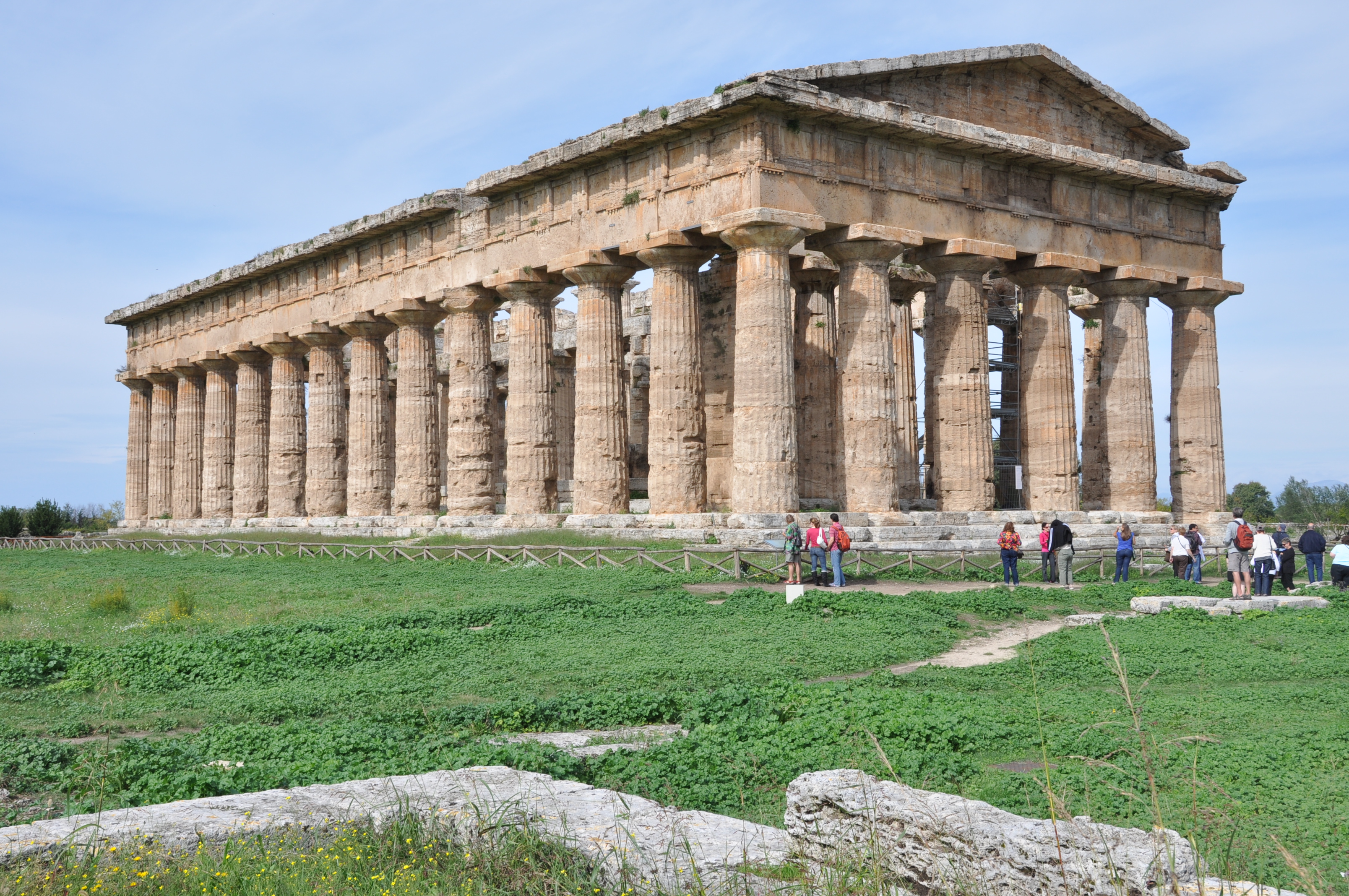
Revelation 3:12 starts "He who overcomes, I will make him a pillar in the temple of My God."

In modern archetecture that doesn't sound very exciting, but when I look at the ancient temples, pillars are pretty impressive -- even in ruins.

The roof gets to see the sky, but the pillars hold it up. Simeon got to see baby Jesus, but who taught him to be patient and faithful? You don't know his parents' names either, do you? We recall Francis of Assisi, but who taught him to listen to God?

We don't notice those "who only stand and wait," but perhaps in heaven we'll be amazed at those pillars that seem unspectacular right now.

Friday, December 26, 2025

That would be a challenge

When I unpacked the electric blanket I spent the time to read the instructions. One section ended with the protocols for returning the product, suggesting that one should use the original packaging if possible.

It was vacuum packed. I could sit on the folded blanket to try to squeeze it down to fit in the box again, but I estimate it would take 5 times my weight to match the air pressure differential it was packed with.

Wednesday, December 24, 2025

"Heaven sounds boring"

Missing out: thanks to a lack of imagination or to a hyperactive one that mistakes illusion and the temporary for something real?

Tuesday, December 23, 2025

Vanity

I have neglected some classical literature. The Vanity of Human Wishes by Samuel Johnson was suggeted to me. I'd not read anything by him that I can recall; I needed to remedy that.

But some great lines: "How Nations sink, by darling Schemes oppres’d," sounds very timely. Or "When Statutes glean the Refuse of the Sword" In context I don't believe Johnson was right. He thought the poor were less likely targets, but as Sowell quoted a sixteenth century German bishop as saying "The poor are a gold mine." Those statutes Johnson mentions don't glean much from any one of the poor, but there are so many that the income is large.

War and consequences: "And mortgag’d States their Grandsires Wreaths regret From Age to Age in everlasting Debt"

And about beauty: "Ye Nymphs of rosy Lips and radiant Eyes, Whom Pleasure keeps too busy to be wise," ... "What Care, what Rules your heedless Charms shall save, Each Nymph your Rival, and each Youth your Slave? An envious Breast with certain Mischief glows, And Slaves, the Maxim tells, are always Foes."

And I see where Austin got the phrase "Pride and Prejudice."

Thursday, December 18, 2025

Mold and radiation

You probably read about the study cultivating Cladosporium sphaerospermum on the ISS to see how this radiation-hardy--nay, radiation-using--mold would handle radiation in space.

OK, backing up. You probably read the reports that a species of black mold was happily growing in a radiation area in the Chernobyl reactor building. It not only wasn't getting (obviously) killed, it seemed to thrive better. "Melanotic fungi migrate toward radioactive sources, which appear to enhance their growth."

That led to a lot of studies of melanin and radiation. In vitro studies suggest that melanin is capable of harvesting electromagnetic energy similarly to, but less efficiently than, chlorophyll--and apparently at higher energies than chlorophyll (which absobs in red and blue bands: roughly 1.8eV and 2.8eV).

Interesting. So the experimenters put together a sealed pair of test chambers (and a duplicate to run on Earth), with two scintillators, one for each chamber, to detect radiation. (Their sensitivity peaked at about 50KeV energy deposited in some unspecified time.) Above these were petri dishes, one of which had been innoculated with mold spores. They kept them cold so the mold wouldn't start growing until they got into space, and once in space every 35 seconds they measured the temperature and the amount of the surface that turned dark with mold. The mold grew just fine. They looked at the difference between the "counts" (number of scintillator signals) in the control side and the moldy side, and found that the difference started at about 0 and grew as the mold did.

Now the difference isn't huge: about 2.6%, which, since the "shielding" was only one-sided you could double to get what the effect would be if you were surrounded by this in your spacecraft. 5% reduction would be nice, but not really worth the glowing headlines. And you can see the error bars on this. But there does seem to be an effect. The dotted lines at about 20 and 200 hours represent times when they estimated that mold had achieved 50% and 100% surface coverage. They had a camera and an algorithm...

Now even medium energy particles are going to do some damage going through creatures. I don't have any idea how a chemical could harvest medium energy photons and electrons resulting from the initial particle going through at some random angle, and suspect it isn't possible.

Low energy photons and electrons would be another matter. We have, in chlorophyll, a proof of principle that if you go low enough in energy harvesting is quite feasible. Even electrons knocked loose with low energy won't go far. But how do we get from here (e.g. MeV protons) to there (10's to 100's of eV photons)?

Researching that was a bit frustrating. The concepts are easy enough, but illustrating with examples, not so much.

At high energies, a photon interacting with matter loses energy by kicking loose electrons, and pair-producing electrons and positrons. Each of these is typically high enough energy to do the same in turn, and you get an exponentially growing number of particles up until their energies drop below the threshold for such fun and games. (And yes, the positrons eventually annihilate and produce photons.) This is all well understood, and well modeled, and I'd hoped to show the rest of the story. Unfortunately, the old standbys of Geant and EGS don't try to follow the showers all the way down.

Once you get below about 1KeV, molecular differences have a very strong effect on the outcome, and just modeling a shower in a nice uniform material like iron gets very complicated. The difference between interacting with an inner shell and an outer shell electron isn't negligible anymore.

So while I could show the cascades that happen from high or medium energy to fairly low energy, I cannot illustrate how the rest of the shower goes, as a (e.g.) 10KeV photon produces weaker photons and electrons which in turn produce less energetic ones.

Near the end of the low energy shower, an electron or photon of a few eV can excite, or perhaps even ionize, a molecule of the scintillator. When the excited electron returns to its original state the molecule produces a photon in the visible spectrum. It'll go some random direction, but if you have enough excited molecules (meaning more energy dumped into the scintillator by the incoming particles), enough of them will head in the direction of the light-sensing part to produce a signal. In really sensitive systems, all you need is one, but your noise rate goes way up, so typically you'll set your signal threshold a bit higher.

Two or three of these visible-light photons hitting your phototube (or equivalent detector) at about the same time will make a little electrical signal that you can amplify, and count if it is bigger than your threshold setting.

FWIW, layering scintillator and stuff to stimulate showers (like iron, lead, what have you), produces showers that produce amounts of light roughly proportional to the energy of the initial particle--which is very handy. Calorimetry. Anyhow, this experiment was just using scintillator in counting mode.

I'd be interested in seeing what photon energies these molds are capable of harvesting. Experiments like this subject them to a broad spectrum of energies. It's probably pretty hard to do--the tunable x-ray systems I know about are designed for radiation doses that would probably toast the molds (you can give plants too much light too).

More as I learn more...

Wednesday, December 17, 2025

Various notes

The study this morning was on Romans 4 and 5, and several rabbits got chased.

How come Adam gets the blame and not Eve? I've heard a several different explanations, which make assumptions about what was going on (Adam forgot to tell Eve the directions, Adam was standing right there, Adam was head-of-household responsible for what Eve did) that resolve into making Adam the main culprit. But if we're making assumptions, why not assume that Paul is rhetorically using the first man as a stand-in for us all, since the Romans passage goes on to say that all sin. That's been the implicit assumption in most discussion of Romans 5, might as well make it explicit.

In Romans 4:11-12 Abraham is described as the father of both the circumcised and uncircumcised believers. In 18-20 he is described as having unwavering faith that God would give him a child. If I read Genesis correctly, he, impatient, got part of that a little confused and tried a shortcut with Hagar (at Sarai's suggestion). So perhaps Abraham is also the father of those of us who believe but get things a bit confused sometimes.

Which, of course, leads into Zacharias vs Mary: "How will I know" vs "How can this be" aka "Can you show me some ID?" vs "What do I need to do?" With answers "OK, you'll be the proof" and "Nothing." Abraham might have done better to ask "How will this be?" and get details clear.

And somehow the question of whether there can be peace without freedom came up at table today. That reminded me of a famous song, which I may not be remembering entirely correctly...

The crown has made it clear
The climate must be perfect all the year

A law was made a distant moon ago here
July and August cannot be too hot
And there's a legal limit to the snow here
In Camazotz
The winter is forbidden till December
And exits March the second on the dot
By order summer lingers through September
In Camazotz

Christmas costume

The worship arts Christmas party invitation wanted us to show up in Christmas-themed, or at least winter-themed outfits. I didn't read it that closely, and wore the same sort of thing I used to wear to work.

I said that I dressed as one of the wise men.

Best choice

A puzzle showed up in my Facebook feed. Two doors. One says you get one billion dollars right now. The other says you get a dollar right now, but it doubles every day. Which do you pick?

Three ways to choose come to mind. The mathematically naive will pick the billion right now, figuring that the other would take too long to do anything useful. Somebody with a little more math, but economically naive, knows that in a month the doubling dollar will grow to be more than a billion dollars (except in Feb, where it's only 268 million or 536 million in leap years).

But the third way notices that in 40 days the value of that dollar becomes over a trillion dollars, and in 50 days each dollar will have started to lose value since there'll now be $1125 trillion to chase only $113 trillion of world GDP. A dollar will then be worth 10 cents, and in another ten days a hundredth of a cent. You can safely assume that panicked hyperinflation would cause everybody to just abandon the dollar entirely.

Or you could decide that neither selection would be good for you and be content with what you have. (Is that playing fair?)

Monday, December 15, 2025

Cell or organism-centric radiation tolerance

A while ago I proposed that the "radiation tolerant" animals inhabiting hot areas in Chernobyl would be slower-growing.

My idea was simple: radiation damage is mostly to proteins, not nuclei (tiny targets). To survive losing the use of proteins, you either need to have different ones than usual whose folded shape is stable with respect to local ionization, or you need to have spares handy. The latter is way easier to arrange, but the price you pay is that you need to actually make more of them, which takes nutrients and energy. If you spend more of your nutrition making more robust cells, you won't make them as quickly, which means the organism is slower-growing.

It occurred to me that this is a cell-centric model, which looks good for single celled organisms (e.g. molds, if you're curious what I've been reading up on recently).

One could have an organism-centric model of radiation resiliance, in which the organism "assumes" that cells are relatively disposable, and generates (and ages-out) cells more rapidly than a normal organism has to.

This too demands more nutrition and energy, but growth rates should be comparable to normal strains of the organism. The organism should need more food than normal to maintain weight -- though I suspect there'd be a lot of variance and you might need larger sample sizes for the study.

The organisms might die younger, too.

Sunday, December 14, 2025

AI cheating or not?

Althouse posted on a report that oral exams were being tested as a way of preventing students from cheating with AI.

At the university, you're paying the teachers to make some change in you: to give you a body of knowledge or a skill or a new way of looking at things.(*) Or are you paying them to certify a lie -- that you are competent at X?

I can easily imagine cases where I'm required to show competence in something that isn't germane to what I really want to learn. For example, suppose I want to master chemistry. That implies a lot of chemistry courses, some physics, and bunch of math courses and some computing: but the university wants me to take some general studies courses as well, like swimming and latin and composition. I balk at that: I don't want to be a well-rounded citizen (who doesn't accidentally drown), I just want to be a chemist.

I could be wrong about the value of those requirements. The younger and less experienced I am the more likely I am to be wrong, and my experience with college students (including myself) has not impressed me with their great wisdom. For example, that composition course is actually pretty important if I want to communicate with other chemists, or CFO's, or funding agencies.

But suppose I'm right, and Subverting the Patriarchy 101 will never be useful to me as a chemist or as a citizen. I can see the temptation to lie to the university and to make them lie on my behalf, certifying to the world that I am competent to subvert the patriarchy -- at the 101 level.

(FWIW, I missed the memo that explained why patriarchy was intrinsically worse than other models for society. It seems to have been successfully implemented everywhere.)

No. Just no. If I can't lift the pallet, I'll say so and bring in a forklift. I won't pretend I can. If I'm really no good at something, I'd like to know where my limits are. And if I have ethical objections, I'll let them know.

(*)When I checked in at the Physics Department at U of Illinois the day after moving to Champaign, I discovered that the next day was a "free shot" at the Qualifying Exam. You got 2 chances once you'd started studying, but trying before you started school didn't count if you failed. I hadn't studied anything in a couple of months, and unlike Feynman I didn't remember all the constants and formulae. One E/M problem I should have remembered the formula for, and didn't, but I did remember how to derive it. The examiners looked at each other as I scribbled on the board. I didn't pass that time. But I did have a handle on the material. Yes, oral exams... cutting edge then and now.

Wok

The subject of exercises for balance brought up The Ministry of Silly Walks. Naturally my contribution was to suggest using a bundt pan.

Talking shop

Parties with engineers or scientists seem to have points of difference with parties with musicians and singers. While some of us with technical backgrounds (e.g. managing the relay satellites around Mars for the rovers) swapped stories and discussed the use of teaching gardens, the musicians armed with a guitar and accordian were singing Russian and Ukranian songs (with a few English ones and even Je ne regrette rien) in the other room. One fellow demonstrated Russian dancing. (It looked sort of like Zorba, but what do I know?) Much livelier.

I guess we all had a good time in our own ways.

Friday, December 12, 2025

Carrington Event

There are much noisier displays out there -- about 25 years ago one home in Madison expanded their electrical service to be able to handle all the lights -- but in our neighborhood these folks are the loudest. (Yes, a lot of that is blinking.) It's a bit of a tradition -- an event -- to drive by on Carrington Drive to see what they've added this year.

Thursday, December 11, 2025

Mementos

The carving of the hut isn't very well done, but given that the sculptor didn't have all of his fingers, or good use of the rest, you can let that slide. But without knowing that this came from a leprosarium and represented the inmates efforts to support themselves, at best you'd think "An interesting tropical wood."

The place looked like other villages, though in retrospect there weren't any kids there that I noticed. We were on a tour, and had several other places to visit. This one sounded more interesting than it was. To me, anyway.

My mother bought it for me. I was a bit dubious--could one catch leprosy from an object?

I asked about the place (in Ganta, I think) a few years later, and was told it was closed. That report must have been either mistaken or temporary; it is still going.

I don't think this memento will mean much of anything, even with its story, to anybody but me. Perhaps it already served its purpose--earning a little money for a crippled sculptor.

What should come next for it? I can't imagine the kids arguing over it (wouldn't want them to anyway). It's value seems to be tied to me.

Wednesday, December 10, 2025

GPS monitoring bracelets

Just a little info about monitoring scale.

Morgan Geyser (of Slenderman fame) was under electronic monitoring in a group home when she cut off the bracelet and fled to Illinois. (FWIW, I've heard that other inmates thought she was still crazy and shouldn't have been out at all.) She is back in custody.

Geyser’s bracelet tampering alert came in at 9:38 p.m. and was placed in a queue for a staff of eight employees and two trainees on second shift, and seven employees on third shift, with an hour of overlap between the shifts, Hoy wrote. Staff first attempted to reset the monitor at 11:10 p.m.. When those efforts failed nearly 25 minutes later, staff called the group home and confirmed Geyser was no longer there.

Geyser’s tamper alarm was one of 397 alarms DOC received over three hours leading up to midnight, nearly two-thirds of which were labeled as “high-priority,” Hoy’s letter said. Any attempts to remove a monitor, such as cutting, stretching or twisting the band, trigger an alarm, as does failure to charge the device’s battery.

Emphasis is mine. That's more than one high priority alert every minute. I doubt that alerts can be resolved quickly, especially at that hour. Having 10 on duty gives you about 7 minutes each, on the average. It took an hour and a half for them to get to it.

Monday, December 08, 2025

Born and/or made

AVI linked to an essay dissecting twin studies.(*) David Bessis wrote a book (which I have not read) which sounds interesting and useful, but I suspect overclaims. "People think that it (mathematics) requires a special gift or that comprehension is a matter of genes. Yet the greatest mathematicians throughout history, from René Descartes to Alexander Grothendieck, have insisted that this is not the case. Like Albert Einstein, who famously claimed to have “no special talent,” they said that they had accomplished what they did using ordinary human doubts, weaknesses, curiosity, and imagination."

I'm not on the same level as those fellows, but I'm well better than average at math.

I only know that by comparison.

I don't feel particularly smart.

It's trivial for me to find problems that stump me. There are people who can solve those problems--and in an academic environment I meet them.

Being acutely aware that a colleague can easily deal with things that puzzle me is a ticket to imposter syndrome. I can't have the same painful awareness of the things that puzzle my colleague that I know how to deal with. Once you've solved a problem it seems easy, so the world is full of hard problems and all I solve are the easy ones.

I don't think that a researcher is always, or perhaps even often, going to be the best judge of how smart he is. An honest man or woman will be honestly humble, a member of the society of the puzzled.

Further, when you're surrounded by the best, that becomes your normal. At Princeton, Einstein didn't run into a lot of people who were no good at math.

FWIW, I suspect that most people are capable of understanding much more math than they dream. Mathematicians are born, but they need to train their minds in ways of looking at things, and with "crystallized intelligence" (standing on the shoulders of giants) even those of us who aren't great geniuses can learn how to make contributions.

I've griped before that advanced math books (and papers) often throw theorems at you without enough examples or motivation. That's not how they did the work to get there -- they played with examples, had some motivation to point them the way they did, and they did a lot of noodling around trying this approach and that.

(*) I'd always wondered how often it would happen that twins would be broken up to different homes. Among other details Bessis dug up, many of the separated twins were raised by relatives in their extended family, so their environments may not have differed that much.

Wednesday, December 03, 2025

I wonder who picked it

It wasn't yet 8 this morning. I needed a few small items and Walmart was close, with an almost-empty parking lot.

The speakers were not playing Christmas music. Yet. Possibly they have some choice what to play on the night shift, and in honor of Black Friday somebody wanted Ballroom Blitz. Or maybe it was coincidence.