Showing posts with label Race. Show all posts

Thursday, August 19, 2021

Speaking of luxury beliefs

Who Will Save Us From Racist AI?

Machine learning can find patterns (although not meanings!) in data, and often improve the accuracy of a diagnosis, and sometimes its precision (as the article says). A paper stirred up a lot of controversy when it found that from chest x-rays, computed tomography, and mammograms the AI program could very accurately predict a patient's self-reported race. I'd heard that a forensic pathologist could identify a corpse's race from the long bones with about 80% accuracy (or was it 90%?) (at least in the USA), but chest bones are new.

This instantly provoked angry complaints that "AI Has the Worst Superpower…Medical Racism."

One of the methods used to test a patient’s kidney function measures glomerular filtration rate (GFR). However, several studies have found that blacks have higher baseline GFRs than whites, so the test has to adjust for this factor depending upon the race of the patient. Graduate student activism led to several institutions removing the racial adjustment or replacing it with a different lab test, ostensibly in the name of addressing “systemic racism.”

In other words, for the sake of their luxury beliefs, the grad students pushed to reduce the quality of care for African Americans.

"One thing we noticed when we were working on this research was that there was a clear divide in our team. The more clinical and safety/bias related researchers were shocked, confused, and frankly horrified by the results we were getting. Some of the computer scientists and the more junior researchers on the other hand were surprised by our reaction. They didn’t really understand why we were concerned."

"You've got to be carefully taught..."

When I first heard of "Marxist-Leninist Physics" I thought the notion obscene. I still do. And my opinion of those administrators and grad students is not printable.

It's quite easy to screw up machine learning, and train it on the wrong things, as with the infamous case of the "horse recognition" algorithm that was trained on pictures of horses taken from an organization's portfolio. The alborithm trained not on the horse but on the logo. A medical algorithm trained only on whites may not do as well on blacks. Looking for skin cancer precursors with a system trained on brunettes may not work so well with freckled red-heads. And it is harder to get a comparable training set with a minority than with a more common group. E.g train on 10,000, test on 10,000. It's easy to find those numbers when the population is a million, but if there are only 5000 to begin with? You can't get statistics as good.

Those are real problems. But that's not the complaint here--the ideologues want to squelch real findings in favor of their beliefs.

I know some people who believe the Earth is less than 7000 years old. Let's squelch carbon-14 dating in favor of something that lets dates fall within that window--just to keep them happy.

That isn't quite a fair comparison. The Young Earth Creationists generally have a lot more redeeming features than the Social Justice Warriors--they've been much more eager to help their neighbors, for one thing; even neighbors who don't agree with them. And their belief is harmless.

Wednesday, November 18, 2020

All I want is ...

"The Campus Planning Committee unanimously voted last week to recommend to Chancellor Rebecca Blank that the boulder be removed from Observatory Hill."

The Wisconsin Black Student Union is mad about Chamberlin rock because it was called something else once 95 years ago. I noted that the furore would resurrect a long-forgotten name. McWhorter seems to have ambitions beyond the symbolic: "After the rock is removed, the Black Student Union's focus will shift to generating ideas for how students of color can reclaim the space, such as installing a piece of art". That's an interesting choice of words. "reclaim" ?

This might be amusing. The effort to remove is purely power politics--the claim that it was a daily reminder of oppression is an obvious lie. But it turns out that another minority group has a stake in the hill--and this stake is statutory.

"UW-Madison needs to secure approval from the Wisconsin Historical Society before removal begins because the rock is located near an effigy mound.

The first step requires UW-Madison to submit a request to disturb a catalogued burial site. All Native Tribes of Wisconsin are notified during the process, which can take 60 to 90 days and includes a 30-day comment period. A qualified archeologist is also required to be on site during removal.

Saturday, September 12, 2020

One drop rule

Grad student apologized and resigned as TA "after falsely claiming to be a person of color."
“I have let guesses about my ancestry become answers I wanted but couldn’t prove,” Vitolo-Haddad wrote in an apology posted Sunday on the blogging platform Medium. “I have let people make assumptions when I should have corrected them.”

In a second apology posted Tuesday, Vitolo-Haddad wrote that when asked if they identify as Black on three separate occasions, they did not say no.

She says she really identifies as Southern Italian/Sicilian. But "I repeated things I heard growing up from my family that I now know to be lies. I am so sorry. I take full responsibility for spreading these lies and am deeply sorry."

Clearly being black in the USA is such a burden that people have been falling over themselves to be labeled black so that they can accrue the social or job opportunities that g o with that. (Jessica Krug...Rachel Dolezal...a whole town

The Teaching Assistant's Association has announce that it will "allow people to provide more feedback about candidates, both in public forums and through anonymous mechanisms." So if someone claims to be black or hispanic (or white), some anonymous poison-pen letter can derail their position (she was co-president). This sounds familiar--a rumor that X had a black ancestor, however remote, might ruin a white man's chances a century ago.

You might argue that turn-about's fair play, or that the idea was stupid then and it is stupid now.

But about those "benefits" from being considered black (or hispanic, or whatever): I notice that the three people who got caught are all women. Granted, the statistics are low, so add in the Guardian story about the town in Ohio, and notice that the only men cited currently "identify as white."

Maybe there are social benefits to being a young black woman that aren't available to a young black man. Or maybe women are more willing to reshape their identities. (Fair or not, women have had to adjust more than men--moving to her husband's tribe; winding up war captive; whatever.) Or perhaps those benefits are only present in certain environments (she is in "Journalism and Mass Communication"). Or maybe it's just poor statistics.

Saturday, July 11, 2020

Reluctance to endure lectures

Althouse got there first: an upscale shopping mall shut down when a BLM protest showed up. It was nominally to be a "block party" to "educate patrons on the plight faced by Black people in America."

One of the protest leaders had the nom-de-guerre Frank Nitty (real name Sensabaugh. (He claims that a "White Supremacy group" had threatened his life. I suspect a "basement email warrier" was the culprit.)

His chosen name is suggestive, though possibly he's ignorant of the original.

This, however, is perhaps more troubling: he served as apologist for a riot that burned down a couple of houses on the rumor that two missing girls were being trafficked there. (They weren't.)

UPDATE: I'm told the nuns would rap your hand with a ruler if you didn't pay attention to the lecture. I wonder about BLM lecturers...

Monday, June 22, 2020

Pundits, problems, prescriptions

When pundits make claims and prescriptions, it's useful to parse out the components of the problem.
  1. Is is a problem? If you worry that most Americans do not go to college, stop a minute and ask why everybody should. If you think everybody would benefit, you should get out more.
  2. Is it a new problem? Remember the epidemic of burning of black churches a few decades ago? When somebody bothered to look at the statistics, it turned out that this happened at the same rate it always had--and most of the fires were and are due to poor maintenance, not anger.
  3. Is the description of the problem accurate? Activists typically have tunnel vision, to put it kindly.
  4. Is the prescription relevant? "End capitalism" is a popular magic cure-all. The dark font in the human soul that pours out hatred and greed and lust is supposedly entirely due to private property.
  5. What side effects does the prescription entail? "Defund the police" and then what happens? I used to wonder if people got their ideas of problem solving from 25-minute TV shows and 20-second commercials, but I'm coming around to the conclusion that a lot of people are neither very bright nor very experienced. But they have certificates.

I'm going to be a bit cold-blooded here.

About 6 black people hung themselves outdoors in the past month

Yes, of course that's a problem. Any suicide is. Or any murder, if that's what it is. (In one of the cases someone allegedly has video evidence that it was murder.)

Is it a new problem? Is the rate higher than it used to be? That might indicate dangerously greater stress, if it is suicide, or an extremely ugly revival of old styles of murder if it isn't.

Let's see. I don't have statistics broken out exactly, but if the suicide rate among blacks is 40% that among whites (from the article), and there were about 48,000 suicides in the USA (2018), there would have been about 2500 black suicides. If the rate of hanging is about 1/4 the total, then in a month you'd expect about 52 deaths by hanging, concentrated in areas with larger black populations. (and in places with higher rates of addiction and mental illness--like homeless camps) I'd expect some fraction of those to take place indoors: maybe 3/4 if one UK survey is applicable. So, 13 outdoors--or more, if the homeless camps contribute a lot to the numbers.

A count of "6" isn't exactly a smoking gun. It tells me that either the estimate for the rate of hanging relative to other methods is off by quite a bit (quite possible--the article didn't break that down by ethnicity) or that most of the incidents haven't been reported on here. In neither case is there evidence for a "new" or resurgent problem. An old one, yes--though one we prefer not to think about.

Maybe there will be. I would not be surprised. Until then..

Saturday, December 08, 2018

Swapping definitions on us

Grim has a link to The Impossibility of Integralist Reform , which points out that Americans no longer share a common definition of "racism." Many of us retain the traditional definitions of "hatred for another race" or belief that one's own race is superior.

The latter definition might be disputed—does it need a second clause to the effect that this gives you the right to dominate others? After all, suppose noblesse oblige required the superior to help the inferior? I suspect the "inferior" would take exception to the evaluation, and consider the attitude to be racism no matter what.

But there's a new definition abroad, not viewed through the lens of the individual responsibility to respect and not harm your neighbor, but viewed in the framework of what the government can do to equalize outcomes.

That various governments did "frame mischief by statute" is unquestioned. (We forget how much of a victory that is!) That such rules ought, where possible, to be rescinded is also not really disputed (though how much influence ought the USA to have over the laws of Mexico? Really?)

But once the explicitly racist laws are undone, at what point does the effort to change end? They present no clear endpoint except for "equality of outcome."

To make it worse, I find no evidence that social forces are sufficient to produce this equality of outcome, or even to get arbitrarily close. The contrary is possible, as we know. The political philosophy, absent an endpoint for government intervention, is therefore defective.

This redefinition tries to bring the opprobrium that attaches to tribalism/racism to opponents of a defective political philosophy. This is dangerous. First, it poisons the discourse—you don't need to listen to obviously evil people, right? Second, it normalizes real racism by equating everyday political disagreement with hatred. I've complained about this before. We haven't seen the worst of this yet. Tribalism comes naturally. We worked hard in this country to minimize it, but it can and will come back. Our Diversity Czars won't fix things.

Eliot understood.

They constantly try to escape
From the darkness outside and within
By dreaming of systems so perfect that no one will need to be good

UPDATE: To be just, although I know many whom Eliot's description fits to a T, I also know some who don't, who seem to partly regard the work as their share in trying to incarnate the Kingdom of God.

Friday, November 23, 2018

Confederates in the Attic

Confederates in the Attic, Dispatches from the Unfinished Civil War by Tony Horwitz
It is an interesting book and you should probably read it. But bear in mind that he went looking for these things—what you would see if you went might differ. The cover picture is of Bob Hodges, who plays a significant role in the book (I sometimes wondered if he existed). He’s a hardcore “reenactor,” willing to hike barefoot and eat hardtack and sleep in the rain—and not wash--in order to achieve the full experience. At one point the group march barefoot carrying live chickens to cook, and when they reach their target, they open up the mailbag to read the letters they had earlier written to themselves. These folk disdain reenactors as unrealistic.

Lots of people, not just from the USA, find the Civil War fascinating. Apparently Gone With the Wind is a huge cultural thing in Japan.

If you read nothing else, read the chapter with the interview with Shelby Foote. "In his view, those who saw the banner as synonymous with slavery had their history wrong. The battle flag was a combat standard, not a political symbol. ... But he pinned the blame for this on educated Southerners who allowed white supremacists to misuse the flag during the civil rights struggle." True or false? Read it for yourself.

Horwitz found “The South will rise again” types without apparent difficulty. As you might expect, they don’t like blacks, don’t like the feds, and don’t like Jews. In the places he found them, they don’t hide. They are part of the community, and not shy about talking to strangers. At least, so it seems—I don’t discount artistic license.

Why the fascination with the Confederacy? He found no single answer; and different people had a different mix of motives. Sympathy for the underdog, fascination with a group that fought hard against overwhelming odds and might have won independence (it was a close call thanks to Copperheads), dislike for blacks and sympathy for a group that didn’t like them either, dislike for centralized power and sympathy for a group that rebelled against it, ancestry--"these are my people", a sense of history--these great events happened right here--and fascination with the romantic heroes of the war. The Confederacy stands for a lot of different things. “Hate” and “heritage, not hate,” both.

In these “South will rise” groups, the actual veterans seemed to have a little more nuanced idea about the Confederate struggle. Surprise. The amount of historical ignorance is rather startling—one town considers itself to be emblematic of the Confederacy, when during the war it was with the Union.

The battlegrounds were in strategic places, and strategic places often remained important. The priorities people living and working there tended more to redevelopment than enshrinement. Horwitz was disappointed.

Not everything in the book revolves around reenactors or the Sons of Confederate Veterans and their ilk. He found places where the war seems to be solidly in the past. Mostly. And when he listened to the debate about the Arthur Ashe statue on Monument Avenue, he was surprised to find reasoned arguments. That says something to me about who he’d been hanging around with.

The continued existence of groups that dislike blacks and sometimes recommend violence taints relations of blacks with whites (who can you trust). On the other hand, the existence of groups of blacks that hate whites (yep, he finds them too, and at least as ignorant as their white counterparts) taints relationships of whites with blacks. By this time the extremes justify each other’s existence.

He admitted that his journeys don’t cover nearly enough cultural territory, and it is pretty obvious that it isn’t remotely representative. We’d be up past our eyebrows in reenactors if it were. The book is now 20 years old.

My experiences were all in large cities—probably “tainted with Yankee attitudes”—so I have no personal yardstick for estimating things. Wikipedia claims that the Sons of Confederate Veterans numbers about 100,000, which looks like less than .15% of the white population of the South. If you assume that similar organizations have similar numbers, maybe 1%. That’s noticeable. For comparison, about 3% of the population is either in prison or on parole. FWIW, in Wisconsin 2/3 of the prisoners committed a violent offence; so estimate that at least 2% of the population is violent. This varies substantially by race.

If you are interested in some of the aftereffects (as of 20 years ago) of the “rich man’s war and poor man’s fight,” read it.

Wednesday, December 20, 2017

Same coin

I'm not up to speed on Cornel West and Ta-Nehisi Coates, and when I saw Althouse's post I figured I should get some notion of what those ideologues were up to these days. One of the comments led me to a NYT article explaining how Coates and Richard Spencer both believe in the primal importance of race and the overwhelming power of whiteness, and where Williams quotes Spencer as saying "This is the photographic negative of a white supremacist. This is why I'm actually very confident, because maybe those leftists will be the easiest ones to flip." I suspect that his confidence is not altogether unjustified, btw--fashions can turn on a dime and the people noisiest about being allies typically don't seem to be investing any of their effort or money in helping individuals. Maybe they hide it very well, not letting the left hand know what the right is doing?(*)

I wrote about the same sort of thing years ago: both right and left in Madison shared a belief in the omnipotence of the USA. If you point out that problem X is beyond our capacity to solve, you get called defeatist or a tool of the oppressors.

"We may be sure that the characteristic blindness of the twentieth century — the blindness about which posterity will ask, "But how could they have thought that?" — lies where we have never suspected it, and concerns something about which there is untroubled agreement between Hitler and President Roosevelt or between Mr. H. G. Wells and Karl Barth." (On Reading Old Books, C.S. Lewis)


(*)"Christ did not love humanity, He never said He loved humanity; He loved men. Neither He nor anyone else can love humanity; it is like loving a gigantic centipede." Chesterton

Sunday, August 13, 2017

The marchers

It was predictable, and I'm not happy to have been right. We've had one flavor of political shock troops for a couple of years--pretty soon we'll have another; maybe more than two. I'd hoped we could keep it all in the past.

I wonder whose side the driver was on. As of this time I have to take every report with a helping of salt. I can think of four different scenarios for the driver without breaking a sweat--three of them fairly likely. All I know is that somebody is supposed to have been arrested. Update: He's alleged to have been seen with the first group of marchers. As feared.

One picture showed a close group of marchers, probably the same team, carrying confederate and nazi flags. (The old Confederacy lands supplied a lot of volunteers to fight the original Nazis.) I've no reason to doubt that "heritage not hate" is a real description of the motives of a lot of confederate flag wavers--and the combination of a symbol of resistance to central control carried with a symbol of totalitarian rule is more than a little ironic. Probably the pictured group were all nazis, and used the confederate flag as the symbol of racial supremacy it is for some people. Some of the other marchers were said to be racial separatists (not the same thing as supremacists, of course), and I've no notion yet of who the rest were, or even if they knew who all the other groups were. Somebody thought it was OK to have nazis tag along, though. Or wanna-be nazis.

Words are supposed to mean something. I've always been interested in history, and WWII was not that long ago when I was young. Nazis were still the symbol of the enemy, and everybody knew why. I hear horror stories that substantial fractions of today's graduates unable to tell what side England was on during WWII (or else who are pulling the pollster's leg--but I observe a fair amount of ignorance myself). What does "nazi" mean to them? Generic bad group? "I know, teacher! I know! It means Trump and anyone who voted for him!" Similarly, racist means you wonder out loud why we import foreigners to cheaply do the jobs you can't find anymore. It isn't even so much "May as well be hanged for sheep as for lamb" as that the distinctions are blurred.

When the powers-that-be claim that noticing certain problems makes you a swamp-dweller, some proportion of you will join the swamp-dwellers. Think of labor relations early last century. Publicly noticing problems got you called communist, and a lot of noticers joined the communist swamp-creatures.(*)

I suspect that too many people have long memories for the nazis to become a significant force again--certainly not under that name. But the attitudes may come back. We had those attitudes before, and though we've had a few generations in which white racism was suppressed, anything can happen--especially when the elite are alien and arbitrary. "Cling to those you can trust"--and you can't trust Pichai, or the Mizzou administration, or HR.

I used "you," but I, and I suspect most of my readers, are in the happy situation of having skills and education that mean we can comfortably ignore some of the problems, and that, knowing the history, we know the boundaries between the ordinary and the vile. I don't worry about the swamp-creatures--there usually aren't a lot of them. We protect free speech for good reason. I worry when people stop noticing the differences. God help us.


(*) National socialism is congruent to international socialism: totalitarian, the party is the most important thing, violent expansion, have to break a few eggs to create utopia... I regard Che Guevara shirts the same way I think of Martin Bormann shirts.

Saturday, March 18, 2017

Necronomicon, by Richard Herrnstein and Charles Murray

I tend to get a bit rebellious when books are forbidden, and this one is treated like Mein Kampf in the circles I work in. (I don’t need to read that; he spelled out in blood what he meant.) And in light of the recent attack at Middlebury this seems timely.

Their Chapter 22 (A Place for All) overlaps a bit with things I’ve been worrying about, and most of their suggestions seem reasonable—though their idea that government aid for children be cut is a deserved non-starter.

Start at the beginning. (I skipped the appendices, btw.) They say society is becoming more stratified and the castes are becoming more and more isolated from each other, mediated only by pop culture which is dominated by one of the castes. This seems clear and true enough.

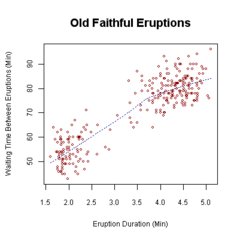
Then they go on to give an exposition of which social issues are and which are not highly correlated with IQ. Here I want to tear my hair. They show beautiful curves displaying how IQ correlates better with income or crime than does parental socio-economic status or education. But there are no error bars or scatter plots (like this) and I have no way of evaluating the comparisons—especially since sometimes the tails on each side have smaller statistics and are less well measured.

But let’s stipulate that the results are largely accurate (for the time being—I have 2 other books to read that are intended to refute this book).

They take a little time to worry about "dysgenics"—that with IQ (or "g", hereafter g/IQ) being strongly hereditary, when the smarter have fewer children, the overall average intelligence will drop, and the rate of really brilliant folk will drop even more. I’d think this one of the controversial sections. I think their model of society is a bit simplistic—the machine we built relies invisibly on qualities other than technological expertise—courage in battle, for example. And it relies on virtue, which I've never found to be correlated with intelligence one way or another. And I’ve often read the complaint that the engineers with the brainpower work for companies run by the guys who majored in beer and blondes--and networking.

Then H&M go into differences in g/IQ between populations. I notice that many people are unable to distinguish between statements about populations and about individuals. H&M do, and try to emphasize that point. They try.

They claim that the average measured g/IQ of Americans of African ancestry is substantially (1 standard deviation) lower than that of those of European ancestry, which in turn is lower than the average for Japanese and Han Chinese. If IQ is the measure of human worth, this is a really big deal—but I don’t believe that and H&M claim not to believe it either. Let me repeat that: human worth and dignity have nothing to do with intelligence or education or family background.

The proper first question about such a difference is not “Is this insulting” or “Will this lead to evil” but “Is this true?”

H&M cite plenty of statistics, and if I do a back of the envelope calculation using statistics from my field, I get similar numbers (restricting my sample to Americans—there was a brilliant Nigerian in our group for a while).

If this is correct, it destroys the iron rice bowl of the “disparate impact” industry. They’ve fought tooth and nail against the idea, as have a generation or 3 of education fadsters.

But it isn’t enough to have the right enemies.

H&M go on to review what has been tried, and what the results have been. Poor nutrition or early disease can stunt the brain, and great progress has already been made in dealing with these—though they think, and common sense suggests, that we hit diminishing returns long ago in this country. (Except possibly for pre-natal nutrition.) Head Start, as implemented, is worthless. (I examined Head Start’s report back in 2013 and came to the same conclusion--by grade 3 there was no effect.)

One thing that helped seriously at-risk children was adoption at birth—but this was not tested for less at-risk children, and as a policy this falls under the category of Like Hell You Will.

Some education seems to have an effect, but H&M didn’t say whether these studies were successfully replicated.

Me talking: One thing that nagged at me was the description of backwoods whites in Kingdom of Cotton. This was a seriously pathological society—feckless, uneducated, and to all appearances dull-witted. A century and a half later things didn’t look nearly so bad in that population, though drugs and lack of jobs have apparently started to make a mess of them since then.

Me talking: How g/IQ gets expressed is going to be a function of good luck (disease and environment, for example) and discipline. And if the very notion of being paper-tested is alien, you may do less well than you would with some practice (e.g. the moderate but limited increase in SAT scores with practice). And perhaps education needs to be differently structured for those at the left side, or those with chaotic families.

Me talking: Other inborn skills aren’t easy to paper-test for: musical, athletic, being able to sense what another person is feeling (as opposed to Asperger’s), and so on. Some of these matter a lot.

At any rate, they go on to worry about an increasingly stratified future in which a cognitive elite try to put the rest “on reservations”, so to speak. The Last Psychiatrist opined that prescription drugs were effectively if not intentionally used to zone out many of the underclass. Be that as it may, a “reservation” society won’t work—the inhabitants will burn it down and whatever else they can reach.

The final chapter has policy suggestions.

Chuck disparate impact but keep other parts of affirmative action; chuck civil union benefits (if you won’t commit why should we?); re-evaluate education structure; decentralize regulation so that more is decided locally—and more simply, so interactions aren't too complicated for the slower (Have you read the 1040 instructions?); simplify what you can in law and regulation; and don’t offer benefits for extra children.

The last point won’t fly, and shouldn't.

Decentralization of authority starkly opposes the principles of 1 ½ of our 2 political parties. The affirmative action industry wants to grow, not shrink, and claims that traditional morality is good are met with howls of hatred.

I can see why it raises a stir.

BTW, one of the things that complicates the field is the Flynn effect--that g/IQ scores have been rising since tests were introduced. That makes calibration difficult. Are they rising because education actually improves raw intelligence, or because people are just getting used to tests and therefore getting better at it (e.g. like practice for the SAT)?

Now for a rebuttal.


The Bell Curve Wars edited by Fraser, is a collection of essays arguing with the Bell Curve. I list the authors below.

  • Steven Gould: His description of "factor analysis" seems interesting, but his claim that the spike in g vanishes and turns into spikes in other "intelligences" if you rotate the parameter space, and that therefore the spike isn’t important, sounds backwards. He gripes about the lack of scatter plots.
  • Howard Garder: Often disingenuous—or maybe he didn’t read thoroughly.
  • Richard Nisbett: Cites lots of studies challenging the black white g/IQ gap. Hurray for Nisbett! He actually addresses some of their research!
  • Rosen and Lane: Ad hominem from the get-go. Rubbish.
  • Ramos: Addresses a few points
  • Sowell: Addresses issues of testing among white groups, questions its reliability
  • Jones: Ad hominem from the get-go and –oh look, slavery! Rubbish
  • Gates: Ad hominem, but mercifully short.
  • Andrew Hacker: Claims that tests are biased and points out the ranges in white g/IQ by ethnicity, and then indulges in mind-reading.
  • Wolfe: Questions the claim that America is developing a cognitive elite class.
  • Judis: Attacks H&M dysgenic claims
  • Kaus: Argues about the genetic vs environment, but is also disingenuous—if racial differences are prenatal, changing that would require massive and intrusive intervention.
  • Glozer: Asserts that H&M shortchange environmental effects, challenges their “utopia.”
  • Peretz: Why don’t we all get along.
  • Wiesaltier: Ad hominem, seems almost proud of his ignorance.
  • Pearson: Blacks have had it bad, and H&M will discourage them.
  • Lind: “Right wing” political history—recognizes role of religion in supporting human equality, but thinks it “ironic.”
  • Kennedy: Bell Curve is bad; people who read it are bad.
  • Patterson: H&M put in references to material which challenges their direction, and draw the reader’s attention to it—therefore the work has “self-contradictions.” His genetic argument doesn’t sound correct—he implies that intelligence is selected-for and then offers an example where propensity for violence is. If both can be, then his formula is wrong.

A few essays do deserve some followup. I’ll not spend the time myself—there are others who address this sort of detail, and I don't intend to spend what few years I have left trying to become an expert in this field. I think I'll skip the third book.

In any event, one of the thrusts of the book is barely dealt with. How to close the gap may be disputed, but the existence of the gap seems not to be. Given that gap, and given that we’re all in this together, what can we do to make sure there is a dignified role for everyone right now?

Maybe some combination of education and encouragement and pre-natal nutrition and whatever may raise the average black achievement—but if that only helps those who are children now, it doesn’t tell us how to structure things for today's adults. And Hacker points out that gaps exist among white ethnicities too—it isn’t a strictly racial divide.

Tuesday, April 05, 2016

It must be there, just unconscious

Princess Ojiaku wrote "The studies just keep coming. Unconscious racism is pervasive. It starts early. And it creates a deadly empathy gap" She cites study after study purporting to show a lack of empathy between races (but not, oddly enough between white and purple). It all sounds fairly interesting, until I hit
Some of the best evidence comes from Peking University, where scientists used fMRI to scan the brains of Chinese college students as they viewed images of Asian and Caucasian faces with either neutral or pained expressions. Before viewing the images, some students were primed with rapidly flashing statements specifically about death, such as ‘My body would rot after death’. Others were primed with negative statements unrelated to death, for instance, ‘The coming exam makes me uneasy’.

Later, researchers examining the data found that Asian students who were primed with thoughts of death had greater empathetic response to the pain of other Asian faces than to white faces in two specific regions of the brain, the anterior cingulate cortex (ACC) and the nearby mid-cingulate cortex, reflecting work that came before. The study, published in NeuroImage in 2015, documented the powerful impact that thinking about death, otherwise known as 'mortality salience’, has on the empathy gap between races, a chasm with obvious relevance to police on call.

If that strikes her as the best, in view of what's been learned about priming studies lately, I harbor deep doubts about the accuracy of the rest of the studies. And the further claim that tribal differences don't seem to matter just adds to my skepticism.

Does anybody know much about the methodology and reproducibility of these things?

Friday, September 04, 2015

Is blood thicker than water?

A Madison police officer was surrounded and attacked by at least one person when trying to arrest a woman who'd attacked someone else. He apparently was able to keep calm, and backup arrived very rapidly, and nobody was seriously hurt. From the newspaper report:

The incident alarmed and dismayed local police officials, especially because the officer involved, Caleb Johnson, has spent years reaching out to residents in the area as the neighborhood officer.

He’s done tremendous work there with things like youth basketball tournaments and bike repair clinics," said West District Capt. Vic Wahl. "To be treated like that for his contributions to the neighborhood? Everyone should be angry about that."

I know people for whom that kind of work matters, who are grateful for acknowledgement and help and who look to pass it on. But most of them don't live in areas like Prairie Road and Jacobs Way--though they often used to. And I meet preachers and other workers who point to changed lives. Systematic studies asking "How much does this help?" seem to conflict somewhat. Maybe systematic analysis is the wrong paradigm here, and numbers don't tell the proper story. Maybe softening attitudes show up as a difference in the types of threats rather than the number of people threatening.

Or maybe Vic Wahl is being naive, and when a call comes to stand with your tribe, on the whole people stand with their tribe.

Race relations seem worse now than 7 years ago. Whether that's mostly because of persistent aggravation of grievances real or perceived, or because the economic climate has hit blacks hardest (and importing cheap labor can't have helped) is hard to tell--likely each exacerbates the other.


FWIW, I never have spent much time around most of the current high-crime neighborhoods, though I go through South Park often and frat row is, of course, close to the University. I remember some of them as quite peaceful, though. We're not at Milwaukee levels, but violent crime has shot way up. I'd really like to see some analysis of who's who and from where.

Tuesday, May 05, 2015

The Go-to Representatives

We're still waiting for decisions about charges in our local "policeman kills black youth" incident. We were told there'd be two days warning.

I know a few of the local black leaders by name (used to work with one lady who died a few years ago) but I noticed that a new group kept showing up in the news stories more frequently than they did: Young Gifted and Black. They were reported as saying some rather stupid things (the prisons should release 350 black prisoners), and I wondered if they were being picked for quotes just because they were noisier and more dramatic than preachers. Then I saw a headline in The Daily Cardinal saying that violence against blacks was a queer issue. I didn't read the story (busy at the time), but thought that somebody was being pretty tasteless in trying to garner support for their pet cause at the expense of Tony Robinson's legacy.

A couple of days later I picked up The Isthmus and discovered that this wasn't an aberration: the leadership of YGaB seems to be almost as heavily into homosexual politics as into black politics.

That left me wondering how they got to be picked as spokesmen so frequently. Most of the black communities I've heard of don't invest a lot of enthusiasm in homosexual issues. The local media do, though. Do I have to wonder who decides who represents who?

Tuesday, March 10, 2015

Robinson

There were two very similar stories in the newspaper Saturday morning.

Nobody was hurt

A man was killed. (not, despite what some of the protesters said, a "boy")

A trifle of perspective: Madison police aren't racists, or the stats would look quite different. But: "While whites seem to await the emerging facts, the first thing African-Americans see is an unarmed black youth killed by a white cop." That's the editor's summary of a more nuanced column--but did the editor have any notion what he was implying?

I can't say the usual suspects were out: you've probably never heard of the Young Gifted And Black group in Madison before. I last heard from them a few weeks ago bitterly complaining about the police presence in black neighborhoods (which, if I recall my oh-so-ancient history correctly, was in response to complaints about crime by the residents a few years back). And at least a third of the people marching down the street past my window were high-school kids, backpacks and all. We'll see if that changes.