Showing posts with label Christianity. Show all posts

Friday, April 03, 2026

Judas

We get some detail about Judas, but not a huge amount. The story isn't mainly about him anyway.

He was a thief, and helped himself to what was in the moneybag. How did John know? Matthew, a tax collector, might have spotted small discrepancies easily enough, and told Jesus, and John, close to Jesus, heard of it. Was Judas afraid of exposure, unwilling to repent?

I've read it proposed that Judas, knowing Jesus' power, wanted Him to quit dilly-dallying and use that power and popularity, and so tried to force Jesus' hand. It didn't work the way Judas hoped, hence his despairing not-quite-repentance. It's quite plausible, but not supported by the texts.

Or perhaps he was jaded with miracles. Many others saw the same miracles and merely got angrier with Jesus, and not at all interested in following Him. Jesus had said some things that would be really hard for a good Jew to listen to ("eat my flesh"), and maybe Judas was wondering if Jesus was really good. We're told that the disciples, when on mission, were also doing miracles--perhaps Judas did some miraculous healings too. People are really good at forgetting inconvenient things, but that would be a doozy to try to forget.

Or perhaps he was sloppy and the devil slowly took hold of him.

Or perhaps his motives were a mix of all of the above.

I heard it asked if Judas had a choice; if the prophecy meant that somebody had to betray Christ. I think that's a bit backwards. If Judas had chosen otherwise, the prophets would have been told something else to say.

It's been claimed that Peter is Everyman, standing in for us all, denying Christ through fear and surprise. But so is Judas, betraying Christ and perhaps not entirely sure why. And so is Thomas, doubting the testimony. And so is John, loved by Christ.

Monday, March 16, 2026

The right kind of sign

In John 6 we read of the feeding of the 5000 and the aftermath: Jesus withdraws to avoid being proclaimed king, walks on the sea that night to overtake His disciple's boat, and is followed by the crowd that had been fed. Jesus accuses them of just following Him for the sake of food, and this follows:
Do not work for the food which perishes, but for the food which endures to eternal life, which the Son of Man will give to you, for on Him the Father, God, has set His seal.” 28 Therefore they said to Him, “What shall we do, so that we may work the works of God?” 29 Jesus answered and said to them, “This is the work of God, that you believe in Him whom He has sent.” 30 So they said to Him, “What then do You do for a sign, so that we may see, and believe You? What work do You perform? 31 Our fathers ate the manna in the wilderness; as it is written, ‘He gave them bread out of heaven to eat.’”

"What then do You do for a sign?" In light of what happened just the day before, that's an odd question. "Our fathers ate the manna in the wilderness" Hint hint hint.

"You just gave us ordinary bread and fish. We want a jazzier miracle."

Thursday, March 12, 2026

Baseball cards

A few memories forcibly reminded me of some thoughts on foolishness as something that defiles.

After mentally squirming a bit, I moved on to other tasks of the day -- and ran across "The dean of the Episcopal cathedral in Pittsburgh" shoplifted $1000 worth of baseball cards from Walmart.

In light of eternity many things we're fascinated with are foolish, but even by ordinary light: he's 42 and "Very Reverend"; is fascination with children's toys seemly?

"For Wales? Why Richard, it profit a man nothing to give his soul for the whole world ... but for Wales!"

Wednesday, March 11, 2026

Hunger and thirst

Someone pointed out that while you could go a day without drinking anything, it was nearly impossible, if you were interacting with other people, to go a day without justifying yourself. Sometimes even when alone, we make excuses to ourselves for the less reputable memories.

Perhaps the "hunger and thirst for righteousness" is really very common, but we go hunting for it in the wrong places: Do-it-yourself frameworks (If I do X, Y, and not Z I'm good), excuses, or persuading (or intimidating) other people into affirming you.

All instead of wanting real righteousness and finding the One who can make it right.

Thursday, February 26, 2026

Ojibwe Singers

by Michael D. McNally : Hymns, Grief, and a Native Culture in Motion

It's about Ojibwe hymn singers, who usually show up at wakes and funerals to sing Christian hymns in Ojibwe. Never heard of that before? Me either.

This is from 2000, so things may have changed. Most of the singers were older, and it wasn't clear then if youth would aspire to joining the singers, who held a position of respect in the community by their willingness to be there for others in this ritual. I know none of these people, though people I know might know somebody who knows.

Ancient Ojibwe traditions in music have the drum as a central (and spiritual) component. Songs typically have few words with much repetition and vocalisms, many are sacred, and many come from dreams. Catholic and Epicopalian missionaries judged that providing Christian hymns to them in their own language was essential for discipleship. They and gifted converts did their best. Some concepts don't have easy analogs in the other language – even "spirit" isn't simple, since the closest analog in Ojibwe seems to have a primary meaning of "mystery."

From the book:

The way the holy prophets went
The road that leads from banishment
The King's highway of holiness
I'll go, for all His paths are peace

Re-translated back into English from Ojibwe:

The way they were going, those who were wise
The little path that leads straight there
I, too, will go off on it
On the little path that is greatly pitied/blessed

The religious situation on the reservations is complicated: some are adamantly pagan/animist, some are Catholic, some Episcopalian, some various other denominations (Baptist, Pentacostal, etc), and some, to judge from the gang activity, have invested their faith in drugs and guns. Many looked on the hymns as impositions by the whites when they were introduced, and still do over a century later.

But in the meantime singing Ojibwe hymns a capella has become a tradition of its own, most especially among "those who pray" but recognized by the rest as well. So much so, indeed that the author cites:

When one Ojibwe man heard hymns at a ceremony honoring a new drum, for instance, he whispered his opinion that such "Christian" music was disrespectful to the drum. For this man, hymn singing stood in opposition to the other music of Ojibwe tradition in that hymns do not involve a drum. The irony of this particular interchange is also instructive. The drum in question was being initiated or welcomed into the community by entrusting it to the safekeeping and discretionary use of the White Earth singers.

The hymns are often sung very differently, though often the original European tune can be discerned, with much more stress on the individual syllables than either the tune or the lyrics as such. They are sung (not "performed") in a ritual, almost liturgical way, with a clear starting and ending hymn but much variation of songs and silences in between.

The author seemed most interested in the things that made the hymn singing specifically Ojibwe and traditional, and seemed to overlook a different aspect: the hymns are a way of saying two things at once: "This is our tribe's" and "We are also part of a bigger tribe."

The author (and apparently others) found no evidence that there was any intent to subvert the meaning of the hymns in any sort of anti-colonial push. Of course the mere fact that they were in Ojibwe during the era when the government was trying to suppress the language might have been a bit of push-back.

If the subject and its history sound interesting, by all means read it, but be prepared: it is painful to read. Not just the history part – plowing through sociological jargon was not fun at all. (Can you possibly say this in five words instead of a hundred words referencing two different other sociologists?) But his personal experiences and observations made it worth it for me.

And yes, one of the White Earth singers was non-native, but he lived like them and next to them, learned the language, and met the standards of hospitality and respect.

Wednesday, February 18, 2026

Dogs and puppies

The story of Jesus and the Syrian woman is one of those rather jarring anecdotes and parables that leave you wondering "What gives?" Jesus calls her a dog?

I was told that the translation is traditional, but poor -- there are two words for dog and this is the one "kynarion" that means puppy, as opposed to "kyon" (as used in Revelation 22:15) that means "dog" in a perjorative sense. The Mark passage reads a little differently with that translation:

it is not good to take the children's bread and throw it to the puppies. But she answered and said to Him, "Yes, Lord, but even the puppies under the table feed on the children's crumbs"

You get the picture, right? Kids feeding the pet dog under the table? It's a lot less harsh.

I gather (same source) that some preachers want to imagine that Jesus learned a valuable lesson about racism from the woman's faith, i.e. Gentiles are just as good as Jews.

Well, there's an extended story that Mark tells earlier, from Mark 4:35-5:43. Jesus tells His disciples to head to the other side of the lake. A storm scares them half to death and nigh sinks the boat. On the other side they meet a demon-possessed pagan, whom Jesus exorcises and sends home with the mission to tell everyone about what God did for him. AFAIK, this is the first apostle whom Jesus commissioned. Jesus cared enough about this (pagan) man and his subsequent mission that travel, scaring His (jewish) disciples silly, the fate of a herd of pigs, and even the temporary death of Jairus' (jewish) daughter were secondary.

That sounds like He had very different priorities than I would have, but they're certainly not bigoted.

Sunday, February 15, 2026

Love and Death

O Lord, you have taught us that without love whatever we do is worth nothing: Send your Holy Spirit and pour into our hearts your greatest gift, which is love, the true bond of peace and of all virtue, without which whoever lives is accounted dead before you. Grant this for the sake of your only Son Jesus Christ, who lives and reigns with you and the Holy Spirit, one God, now and for ever. Amen.

love ... without which whoever lives is accounted dead before you

The prayer isn't gospel, of course, but since God is love, if we don't have love we, that far, do not fully have God in our life. Which is like not having life in our life.

We kid ourselves about love a lot, of course, thinking we're better at it than we really are, and mistaking sexual attraction and inoffensive habits for the deeper thing.

How much of what I did today was infused with "willing the good of another"? Was all the rest "wood, hay, and stubble"?

Wednesday, January 28, 2026

Romans 7 and zombies

A few years back I puzzled a bit about the popularity of zombie stories, and puzzled again.. I was thinking then in terms of fear of dissolution of social bonds and expectations, but ...

The zombie is a live body but dead mind and spirit. It looks alive, but isn't really.

Suppose one has a live body and live mind but dead spirit?

What could kill the spirit, though? Christians will probably see where I'm going with this; think of yourself in a world of living dead, with the fear that you are one of them yourself -- or can be one. Or were one.

"Jesus came to raise the dead. He did not come to teach the teachable; He did not come to improve the improvable; He did not come to reform the reformable. None of those things works." — Robert Farrar Capon

"Apocolypse" means "unveiling", so the zombie apocolypse means the revealing of a world of living dead.

Sunday, January 25, 2026

Spiritual Disciplines

"You fight the way you train"

What spiritual challenges and temptations do you expect to face? Not the easy ones, the weaknesses you don't like to think about.

How do you want to respond to them?

How can you train for that response?

I'm not thinking about plotting out dialog. Jesus deprecated that. Explaining the hope that is in you isn't what I'm talking about either.

When I remember some of the things I have faced and try to come up with exercises to train my reactions to try to do better next time, two things come quickly to mind. Some of those old stories about what saints did don't sound quite so outlandish, and "Lead us not into temptation". I can only do so much.

Strangely dim

"Turn your eyes upon Jesus. Look full in His wonderful face, and the things of Earth will grow strangely dim in the light of his glory and grace."

The Beatific Vision -- seeing God as we've never seen Him before -- is almost by definition greater than anything we see in the world.

And yet I think the wording of the hymn isn't quite right. I think the better we see God, the better we see Him in everything else as well. "Strangely dim" -- but only relatively so.

Thursday, January 08, 2026

Comparing

"because that which is known about God is evident within them; for God made it evident to them. For since the creation of the world His invisible attributes, His eternal power and divine nature, have been clearly seen, being understood through what has been made, so that they are without excuse."

From Motse's "Will of Heaven":

Moreover I know Heaven loves men dearly not without reason. Heaven ordered the sun, the moon, and the stars to enlighten and guide them. Heaven ordained the four seasons, Spring, Autumn, Winter, and Summer, to regulate them. Heaven sent down snow, frost, rain, and dew to grow the five grains and flax and silk that so the people could use and enjoy them. Heaven established the hills and rivers, ravines and valleys, and arranged many things to minister to man's good or bring him evil. He appointed the dukes and lords to reward the virtuous and punish the wicked, and to gather metal and wood, birds and beasts, and to engage in cultivating the five grains and flax and silk to provide for the people's food and clothing. This has been taking from antiquity to the present. Suppose there is a man who is deeply fond of his son and has used his energy to the limit to work for his benefit. But when the son grows up he returns no love to the father. The gentlemen of the world will all call him unmagnanimous and miserable. Now Heaven loves the whole world universally. Everything is prepared for the good of man. The work of Heaven extends to even the smallest things that are enjoyed by man. Such benefits may indeed be said to be substantial, yet there is no service in return. And they do not even know this to be unmagnanimous. This is why I say the gentlemen of the world understand only trifles but not things of importance.

Tuesday, January 06, 2026

Holy ground

In Exodus 3 God told Moses to take off his sandals because he was standing on holy ground. The dirty and artificial wasn't to touch the holy ground. But Moses was required to.

Over in Ezekiel we read of the care required to keep the holy separate from the people -- and in Leviticus rules about how even the priests have to take care. But the original call was to come and stand on the holy ground; I suppose in order to be part of the holy, the set-apart.

That isn't just a New Testament thing. Even in Leviticus: "Be holy, for I am holy." Cast off the dirt and come to the holy ground to become holy.

Of course it isn't always easy, and we need Someone to clean us and bring us there.

Saturday, December 27, 2025

Pillars

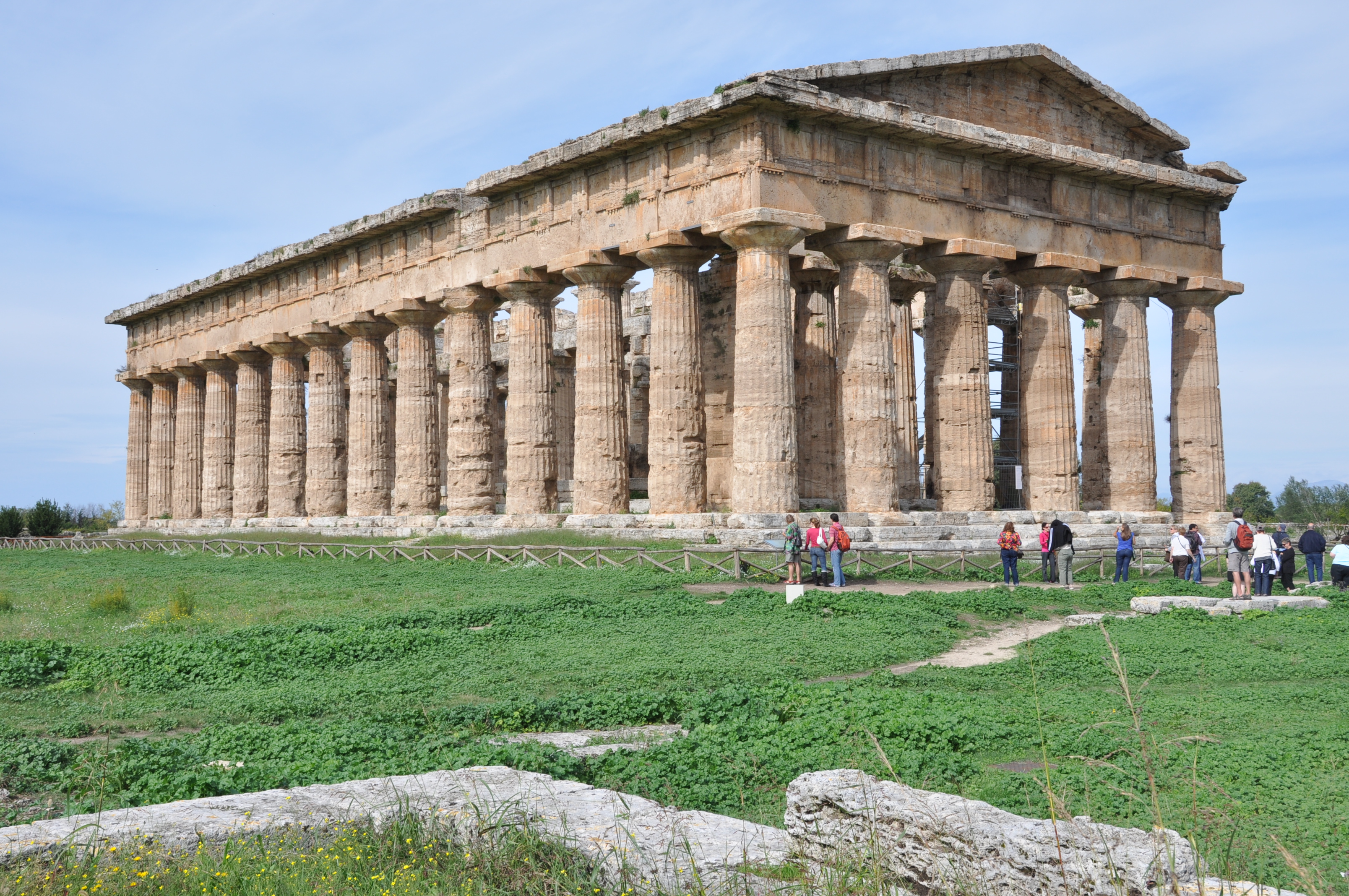
Revelation 3:12 starts "He who overcomes, I will make him a pillar in the temple of My God."

In modern archetecture that doesn't sound very exciting, but when I look at the ancient temples, pillars are pretty impressive -- even in ruins.

The roof gets to see the sky, but the pillars hold it up. Simeon got to see baby Jesus, but who taught him to be patient and faithful? You don't know his parents' names either, do you? We recall Francis of Assisi, but who taught him to listen to God?

We don't notice those "who only stand and wait," but perhaps in heaven we'll be amazed at those pillars that seem unspectacular right now.

Wednesday, December 24, 2025

"Heaven sounds boring"

Missing out: thanks to a lack of imagination or to a hyperactive one that mistakes illusion and the temporary for something real?

Wednesday, December 17, 2025

Various notes

The study this morning was on Romans 4 and 5, and several rabbits got chased.

How come Adam gets the blame and not Eve? I've heard a several different explanations, which make assumptions about what was going on (Adam forgot to tell Eve the directions, Adam was standing right there, Adam was head-of-household responsible for what Eve did) that resolve into making Adam the main culprit. But if we're making assumptions, why not assume that Paul is rhetorically using the first man as a stand-in for us all, since the Romans passage goes on to say that all sin. That's been the implicit assumption in most discussion of Romans 5, might as well make it explicit.

In Romans 4:11-12 Abraham is described as the father of both the circumcised and uncircumcised believers. In 18-20 he is described as having unwavering faith that God would give him a child. If I read Genesis correctly, he, impatient, got part of that a little confused and tried a shortcut with Hagar (at Sarai's suggestion). So perhaps Abraham is also the father of those of us who believe but get things a bit confused sometimes.

Which, of course, leads into Zacharias vs Mary: "How will I know" vs "How can this be" aka "Can you show me some ID?" vs "What do I need to do?" With answers "OK, you'll be the proof" and "Nothing." Abraham might have done better to ask "How will this be?" and get details clear.

And somehow the question of whether there can be peace without freedom came up at table today. That reminded me of a famous song, which I may not be remembering entirely correctly...

The crown has made it clear
The climate must be perfect all the year

A law was made a distant moon ago here
July and August cannot be too hot
And there's a legal limit to the snow here
In Camazotz
The winter is forbidden till December
And exits March the second on the dot
By order summer lingers through September
In Camazotz

Monday, November 24, 2025

Hiding the key to knowledge

Following up on the thoughts about "explaining away" God's rules, it struck me that sometimes there isn't a really good alternative.

Take, for example, charging interest. Exodus and Deuteronomy forbid charging interest to one of your people, especially the poor.

On the other hand, in purely civil terms it makes good economic sense to allow the charging of rent for the use of your property -- you are deprived of the use of it for a while and ought to be compensated. And experience shows that if you forbid charging any interest, either the supply of loans dries up or people develop workarounds.

What kind of workarounds? Well, you can redefine usury to mean "extortionate charges." After all, Jesus' parable of the talents doesn't condemn earning interest, so maybe only excessive interest is meant, despite the Torah text.

Or you can get picky and say it only applies to insiders, but of outsiders you may exact what you choose. This doesn't seem just.

You can buy a nominal item from the lender for cash and arrange to sell it back later for more money. Legal fiction

You can pay a commission proportional to the amount borrowed that varies with the length of time you need the money. Legal fiction

Distinguish between loans for investment and loans for consumption: the former being activity which should bring a return that the borrower can easily pay the lender from--and therefore not predatory. Splitting hairs, but maybe supportable

And so on. Some of these are Muslim inventions, and some more universal. The point is that an activity which is apparently forbidden sometimes has to happen in some way whether forbidden or not--and not in order to break any other commandments, just to manage ordinary buying and selling. (If you are among those who believe ordinary buying and selling is evil, please remember that attempts to forbid this have been some of the most calamitous experiments in history. Whatever evil you hope to stop that way, starving people is worse.)

Killing people is bad, and murder is forbidden, but sometimes there's war, or self-defense, or just having to kill a fellow villager who has proved dangerous to the community and who won't stay away. I've known some thoroughgoing pacifists, and been very grateful that they were not in charge of anything. But what shall the church say? That war is good? (a lie) Or that because war is bad you must never kill? (not obviously true, and has very bad effects; scripture seems to show an implicit duty to defend) Or that war is bad but the church would exceed its mandate if it told you what to do? (you really don't want the state to be supreme). Or that it is only permissible when God's prophets endorse it? (which are which?)

Or perhaps that killing is bad and you'd better never get comfortable with it, even when it is necessary? And pray that God will understand. (My own view is that although Cortez will have a lot to answer for at the Judgment, he'll at least be able to say that he helped destroy the Aztec empire. However, I'm not God; weight my view accordingly.)

Consider the giving of alms. I know from observation that if I give cash to X, he'll use it to give grief later as a "drunk and disorderly." Do I follow the plain command and give when he asks, or assume some kindness to my neighbors, or perhaps even responsibility for X, and decline or perhaps just give on my terms (e.g. food)? The Didache (first century church document) says "Let your alms sweat in your hands, until you know to whom you should give." That seems to suggest a bit of discernment is advisable, though in context there's no other hint of it--though in any event it expects a generous spirit. (and warns of judgment on beggars who don't need the alms!)

Do I owe more to the immediate request of X for money, or to his wife and the likely (though never entirely certain) result of X's use of the money?

How much of this is muddying the waters? Is it a council of despair to say that sometimes there are no good choices and we will have to answer for whichever of them we choose? That's a dangerous claim, since there almost always are good choices, and we tend to jump at loopholes and excuses. Which makes "sometimes no good choices" an easy way to muddy the waters and hide the key to knowledge.

Sunday, November 23, 2025

Build their tombs

The sermon was on Luke 11's woes this morning. The preacher missed a bet and didn't explain what the lawyers were--expert theologians. I made a mental note to remind him of that for his second sermon.

I'd always found Jesus' comment to be a bit of a non-sequitur: "So you are witnesses and approve the deeds of your fathers; because it was they who killed them and you build their tombs."

Burying the dead was a mitzvah, an act of true kindness (unrepayable), that even the high priest was obligated to do if nobody else was around.

But thinking of the lawyers as professional theologians made it click. Their ancestors didn't care for the prophets' messages, so they killed them. The lawyers made sure to carefully reinterpret the messages to make them harmless--bottle them up. Burying the dead is not the same as building a big tomb to hide them behind. We've seen tombs and mausoleums impressive enough to make us forget who it was supposed to remind us of.

The last woe ties in with this interpretation: "you have taken away the key of knowledge." Obscuring the spirit of the law with details, or an "explanation" of why it doesn't mean what it says seems like a good way to do that. And Jesus called out an example of that elsewhere: something dedicated to God (corban), even if the actual gift was delayed and you still enjoyed beneficial use of it, could not be used to take care of your parents, despite the explicit command.

Of course a more usual take also works to explain the last woe: "the fear of the Lord is the beginning of wisdom" = key of knowledge, and piling up a heap of human rules can obscure the "fear of the Lord."

Applications... It's no trouble at all to find theologians adept at justifying the unjustifiable. Are there hard passages I gloss over? Or at least don't think too much about? Um, yes. I'm guessing that those need more listening, even if my applications don't change.

Wednesday, November 19, 2025

Early thoughts

from Romans 2

"Judgment" is a bit ambiguous. What's its purpose? Condemnation, or "Houston, we've had a problem"? It's a lot easier to notice a problem and take warning than to evaluate all the details. I have to apply some judgment, enough for my needs and responsibilities (Is that guy likely to prove a threat? Would she be a good teacher?), but more than that may be encroaching on God's turf.

Romans 2:7 and 2:8 both describe people who persevere--clear cut "trying to be good" and "trying to be bad". Judging the lazy is a bit messier. Though there's always Laodicea.

We don't go in a lot for gnostic "special knowledge needed for true salvation" explicitly, but we seem to emphasize classes more than practice. Of course it's easier to get people to show up for most sessions of a class than to scrape together a snow-shoveling crew of the able-bodied (who have to get to work or school too). But "render to each person according to his deeds" suggests that maybe taking class notes isn't quite all that's required.

Judgment for all, for the Jew first and then the Greek. The order seems to reflect who got the explicit revelations from God, and from whom more is expected. If so, Christians, following the revelation of the living Word, seem likely to be first in line now.

Sunday, November 02, 2025

Kingdom come

The sermon today was on Luke 11:1-13, which begins with a shorter version of the Lord's Prayer and ends with "If you then, being evil, know how to give good gifts to your children, how much more will your heavenly Father give the Holy Spirit to those who ask Him?"

One obvious question is "Where in the Lord's Prayer does one ask for the gift of the Holy Spirit?"

I wonder if it comes from basileia: "bas-il-i'-ah; from G935; properly, royalty, i.e. (abstractly) rule, or (concretely) a realm (literally or figuratively):—kingdom, + reign." If the word means kingship, and the invitation is implicitly for that to come beginning with us, then perhaps that part of the request is for God's kingship to be in us. If so, thanks to God's simplicity, that's a request for God to be in us.

Yes, I know Matthew has something a bit different.

Friday, October 03, 2025

Sermons

A First Things article on beautiful sermons mentioned as an example Augustine's sermon on the woman washing Jesus' feet.

I like it. It's far from the N-point acronym-type sermons, and it isn't overly long either.