Wednesday, February 18, 2026

Dogs and puppies

The story of Jesus and the Syrian woman is one of those rather jarring anecdotes and parables that leave you wondering "What gives?" Jesus calls her a dog?

I was told that the translation is traditional, but poor -- there are two words for dog and this is the one "kynarion" that means puppy, as opposed to "kyon" (as used in Revelation 22:15) that means "dog" in a perjorative sense. The Mark passage reads a little differently with that translation:

it is not good to take the children's bread and throw it to the puppies. But she answered and said to Him, "Yes, Lord, but even the puppies under the table feed on the children's crumbs"

You get the picture, right? Kids feeding the pet dog under the table? It's a lot less harsh.

I gather (same source) that some preachers want to imagine that Jesus learned a valuable lesson about racism from the woman's faith, i.e. Gentiles are just as good as Jews.

Well, there's an extended story that Mark tells earlier, from Mark 4:35-5:43. Jesus tells His disciples to head to the other side of the lake. A storm scares them half to death and nigh sinks the boat. On the other side they meet a demon-possessed pagan, whom Jesus exorcises and sends home with the mission to tell everyone about what God did for him. AFAIK, this is the first apostle whom Jesus commissioned. Jesus cared enough about this (pagan) man and his subsequent mission that travel, scaring His (jewish) disciples silly, the fate of a herd of pigs, and even the temporary death of Jairus' (jewish) daughter were secondary.

That sounds like He had very different priorities than I would have, but they're certainly not bigoted.

Monday, February 16, 2026

Connections

Some mathematician with a sense of humor decided to borrow a bit from the study of graphs to illustrate how significant Erdos has been in modern math. You are "connected" to Erdos if you have co-authored a paper with him, or with someone who has co-authored, or with … and so on. Erdos himself has number 0, someone who wrote a paper with him has number 1, someone who wrote a paper with someone who wrote a paper with him has 2, and so on. I have Erdos number 4 – not because I'm a good mathematician (far from it) but because I was part of a physics experiment in which some theorists (who I actually never met) had co-authored a paper with some mathematicians who had number 2. The connection between me and Erdos is tenuous enough to make the matter completely silly.

It's the "6 degrees of separation" thing, just applied to a particular man.

Just for fun, can we extend this to Epstein? He's number 0, and just for fun assign 0 to Maxwell too.

But what do we mean by connection? Having spent time with him or in his parties, or having had professional dealings with him? Maybe both? His guards or his chef would have "Null" for social connections and "1" for professional. Trump and Clinton have a "1" for social connections; dunno about professional ones. In fact, never mind the professional connections, it's boring.

Do I need to say that I'm not going to be in the lists? I don't run in "connected" circles. But pretty much everybody in the House and Senate is either a 1 or 2: knew him or knew someone who did. The people who know/work with them in turn are 2's or 3's in social connections. The next ring out will be the state legislators and such.

So if you know a state legislator (a former one was in a Bible class with me), you might have an Epstein number of 5 or so. Of course that's attenuated enough to be pretty meaningless too.

Me? Well, theorists like Hawking (a "1"; Epstein seems to have liked to hang out with scientists) tended to hang out with theorists, but the top guys do meet sometimes, so I'm probably at least a 5, maybe a 4. I don't feel particularly tainted by such a distant association.

Pick a figure or two you don't like. How connected are you to them?

It seems trivial to say that the "well-connected" will be have more connections to each other than to the rest of us, but the rest of us group into clusters too. I had one set of connections at the university, and a different set at church. At separations of less than about 3, there was pretty much no overlap.

Some of those clusters map onto tribes, and some of the tribes are hostile, but even so there are still connections. If your church is helping some of the poor, members will be establishing relationships with them (I hope), and have less separation from the underclasses than, say, members of the math department will have with them.

Connections can be curious. How is O'Hare airport connected to Al Capone? If you don't know…

UPDATE: Closer than I thought! Lisa Randall spent some time in the CDF control room. IIRC the accelerator was down and so we talked a bit about what I was reading to pass the time: Augustine's Confessions. This was before 2008, so I doubt that there would have been any.

Sunday, February 15, 2026

Love and Death

O Lord, you have taught us that without love whatever we do is worth nothing: Send your Holy Spirit and pour into our hearts your greatest gift, which is love, the true bond of peace and of all virtue, without which whoever lives is accounted dead before you. Grant this for the sake of your only Son Jesus Christ, who lives and reigns with you and the Holy Spirit, one God, now and for ever. Amen.

love ... without which whoever lives is accounted dead before you

The prayer isn't gospel, of course, but since God is love, if we don't have love we, that far, do not fully have God in our life. Which is like not having life in our life.

We kid ourselves about love a lot, of course, thinking we're better at it than we really are, and mistaking sexual attraction and inoffensive habits for the deeper thing.

How much of what I did today was infused with "willing the good of another"? Was all the rest "wood, hay, and stubble"?

Hands-on science demonstrations

The elementary school science night is coming up next month, and I'm debating what to demonstrate this year. Part of the point of it is getting the kids up close and personal with the equipment (or the rocks, or the crafts, or the snakes in the case of the snake show people), so the demonstations have to be short – no big lecture hall demonstrations, all hands-on or hands-close.

I have the usual lasers and lenses, diffraction gratings and polarizing filters, and this year I can do a double-slit demonstration too. And I can do some electrostatics demonstrations this year, not just the usual magnetic field demos.

A kids' favorite is the Newton's cradle with 1 pound steel balls. It is a bit too battered to be a nice momentum/energy demo (it doesn't keep clacking back and forth for very long), but with bits of paper in the middle there's a nice connection to meteors. Unfortunately the fishing line breaks a lot on that one and the younger kids want to make the balls flail around, so it needs extra supervision.

This year I got a cheap geiger counter, and wonder if some simple demonstrations of radioactivity are in order. Pro: they may not see this again until college, if then. Con: some people freak out easily and fear is contagious. But then people seem OK with the snake demo crowd, so maybe that's OK.

Since I'm alone at the table I have to supervise all the demonstration gear and do the spiel for the current demo at the same time. That's another limit on what I can do.

I've a uranium glass plate that makes the counter sing, but not much else. I could open up a smoke detector (I'm not such a fool as to try to get the source out of the well, though), but I'd probably get in trouble for that unless I posted it. The counter's not sensitive enough to pick up potassium chloride pills, much less bananas. The old thorium lantern mantles haven't been made for years. Any inexpensive suggestions? I can order some uranium ore, but I've already got uranium in the plate.

What would you have gone for? This is indoors, so nothing explosive or flammable, and the age range is 4 to 11 years or so.

A daughter generally does rocks and minerals at a different table. A rocket club shows some of their rockets but doesn't launch anything. A pity. Outdoors we could tether a rocket to wrap around a bar, or try a pinwheel.

News

Some of the social media, and sometimes the news, reminds me of Kipling: If ye find that the bullock can toss you, or the heavy-browed Sambhur can gore; Ye need not stop work to inform us. We knew it ten seasons before.

Tuesday, February 10, 2026

Sports events

If I'm playing in the game,(*) I'm excited about it. If a family member or friend is playing, I'll watch and stay interested. If I don't know a soul, I have trouble caring.

I'm just not part of our harmless ritual of belonging: fans rooting for their team.

I've been like that all my life. It's probably a deficit of character somehow. It's not at though I spend the time with more productive pursuits -- I manage to waste time other, generally less social, ways.

It certainly cuts down on the small-talk possibilities.


(*) My knees say playing baseball is much less likely than it used to be, and once I was out of school and away from PE, it was improbable even then.

UPDATE: For anyone looking back on this years from now, wondering what brought the subject up, the Super Bowl was a few days ago and the Winter Olympics is still on.

Sunday, February 08, 2026

Different takes

Tonight we were talking over Luke 13:6-9, the parable of the fig tree being given one extra year. I'd thought of it as a warning that (contra the prosperity gospel), having lots of material and even apparent spiritual goods might be a sign that this was your last chance. Someone else looked at the context ("but unless you repent, you will all likewise perish") and suggested that the vineyard-keeper was the one repenting from not having done his job taking care of the fig tree.

Thursday, February 05, 2026

First order pleasures

All I know of Scrooge McDuck is that he had nephews and he loved to dive and swim in a vault of money.

Never mind petty details about the density and viscosity of cash. He wants to swim in it because other people value it -- not because of its beauty or sensual pleasure. Gold can be pretty, but piles of it aren't terribly aesthetic, though perhaps Smaug might see it so.

Which makes the pleasure rather second-order; not that it is pleasant in itself but it's pleasant because of what other people think about it. You don't enjoy it directly.

One first-order pleasure is admiring the beauty of the refracting crystals in the snow as your headlights shine on them as you drive. Not that I want to swim in the snow, but it makes me happier to look at it, no matter what Vogue says about this year's flake styles.

That's not to say that "first order" is better. Some pleasures are greater when shared, and you can have joy in the pleasure someone you love takes in a gift -- child with a new puppy?

But ... Arm candy or a friend? Caviar or red beans and rice? Up until the xrays burned out my taste buds, I could truthfully claim that no restaurant made the latter dish as well as my mother did, or my wife, or even me.

Sunday, February 01, 2026

Living by the calendar

I read an essay by someone who deprecated life "lived by the calendar" as mechanical and dead. I looked at our calendar. It's more a matter of living by the promises we made.

Distinguishing different types of concerts

Are the "nose-bleed seats" in the Sherpa-guided upper-upper balcony, or down in front by the wall of speakers?

Wednesday, January 28, 2026

Romans 7 and zombies

A few years back I puzzled a bit about the popularity of zombie stories, and puzzled again.. I was thinking then in terms of fear of dissolution of social bonds and expectations, but ...

The zombie is a live body but dead mind and spirit. It looks alive, but isn't really.

Suppose one has a live body and live mind but dead spirit?

What could kill the spirit, though? Christians will probably see where I'm going with this; think of yourself in a world of living dead, with the fear that you are one of them yourself -- or can be one. Or were one.

"Jesus came to raise the dead. He did not come to teach the teachable; He did not come to improve the improvable; He did not come to reform the reformable. None of those things works." — Robert Farrar Capon

"Apocolypse" means "unveiling", so the zombie apocolypse means the revealing of a world of living dead.

Sunday, January 25, 2026

Spiritual Disciplines

"You fight the way you train"

What spiritual challenges and temptations do you expect to face? Not the easy ones, the weaknesses you don't like to think about.

How do you want to respond to them?

How can you train for that response?

I'm not thinking about plotting out dialog. Jesus deprecated that. Explaining the hope that is in you isn't what I'm talking about either.

When I remember some of the things I have faced and try to come up with exercises to train my reactions to try to do better next time, two things come quickly to mind. Some of those old stories about what saints did don't sound quite so outlandish, and "Lead us not into temptation". I can only do so much.

Fast Breaking News

often reminds me of Twain's story of The Admiral in Roughing It.

Strangely dim

"Turn your eyes upon Jesus. Look full in His wonderful face, and the things of Earth will grow strangely dim in the light of his glory and grace."

The Beatific Vision -- seeing God as we've never seen Him before -- is almost by definition greater than anything we see in the world.

And yet I think the wording of the hymn isn't quite right. I think the better we see God, the better we see Him in everything else as well. "Strangely dim" -- but only relatively so.

Friday, January 23, 2026

Privateers

Grim's sense is that privateers could work better than the more bureaucratic armed forces. He has far more experience with the bureaucratic armed forces than I, but I worry about a few details.

To whom do the privateers owe primary allegiance? Their organization or the country for whom they are fighting? With just a smidgeon of corruption and media connivance (you tell me if that exists in this country) it wouldn't be hard for a cartel to get approval and funding to attack their rivals.

Even with an organization with less disreputable initial aims than a cartel, mission creep can turn it into a public menace.

Going further, what would privateering look like in an era of drones? Drones can be carried and controlled in a truck as easily as in a boat--probably more so. Inconvenient prosecutors or judges might have to hide. Organizations do go rogue sometimes.

And as the cited Sal Mercogliano video notes, it isn't as though the US has a small navy anymore: 2nd largest in the world (Sal says 1st, but that's the Chinese). Recent events show that bureaucracies don't have to slow it down that much.

The law might have one useful side effect--it could force Congress to decide what sort of relationship we have with hostile non-state armed organizations. Is it a war, or something else--and when do we know we've won?

Thursday, January 22, 2026

Cold

Below about 5F is biting cold. Up near freezing, with the air loaded with moisture, is hammering cold.

Friday, January 16, 2026

AI and religion

First Things has an article suggesting that AI may increase people's interest in religion, as they find themselves more purposeless.
“If automation hollows out jobs, what will people do all day that feels meaningful?”

Simple, he responded: They will do what humans have done since time immemorial, which is look to faith for answers and a sense of purpose.

I'm not persuaded that AI will be as disruptive as advertised. Much of the potential danger assumes that people will decide to rely on it and put it in control of things. But people have agency, and sometimes they even learn from mistakes.

But for the moment assume that it will be seriously disruptive. It's plausible that people, in turmoil and loss, will look to religion.

But which religion? Last century saw the rise of horrifyingly destructive cults--two of which demanded bloody world war to put down, and a third which demanded human sacrifices on a scale never seen before and is still active.

Wednesday, January 14, 2026

Divisions

I wasn't familiar with how the Sri Lanka Tamil vs Sinhal rivalry developed. The author blames a few politicians, and points to parallels ancient (Nike riots) and modern.

Apart from the law

We were discussing Romans 7 this morning, and ran across "I would not have known about coveting if the Law had not said, “You shall not covet.” But sin, taking opportunity through the commandment, produced in me coveting of every kind; for apart from the Law sin is dead."

I would have written the last as "apart from the Law sin is paralyzed," but it turns out God didn't invite me to write a letter to the Romans, so take my preferences for what they're worth.

Anyhow, Paul uses death in several different ways here, requiring careful reading, hence some of the discussion.

One image that covers some of the description for me is that of a little child, too young to understand the rules, but not too young not to want to break them once found. Parents will know what I'm talking about.

Tuesday, January 13, 2026

Scott Adams will be missed

By some.

I regret not taking the time to explore an observation I made years ago at UW, and tried to measure where Dilbert cartoons could be found and what fraction they were of displayed cartoons on doors and bullitin boards.

From time to time I had reason to stroll through some of the engineering buildings, or chemistry or match, and now and then the business school. Fifteen/twenty years ago Dilbert was all over the place in physics (I had some) and computing and engineering, but not at the business school. Other cartoons appeared there, so it wasn't a department dictum on decorum.

I wish I'd checked on life sciences and arts and language too.

Since Dilbert so often skewered pointy-haired bosses and HR, it's no surprise that the strip wouldn't pop up on grad student doors so much in those regions. (Not that HR has many grad students – the relative number of grad students would skew total counts to the hard science departments.)

From the speed with which the strip was dropped I suspect there was great relief in the relevant management and HR corporate quarters at the excuse for revenge.

I read in one of his books, as an aside, his explanation for a positive thinking approach – that good luck came to those who claimed it would come. It seemed a kind of magical thinking for someone who professed to be quite rational.

He announced that he was taking Pascal's Wager when he no longer had anything to lose. That doesn't seem quite cricket, but I suspect God will take him anyway – perhaps to his surprise.

And perhaps he'll learn what might have been.

Lewis has Aslan tell Lucy that nobody is ever told what might have happened. In one sense that's true. We're linear people, and absorbing the branching tree of life's possibilities is more than we were made to understand. But I wonder if being confronted with who we could have been is part of Judgment Day.

Monday, January 12, 2026

Measuring happiness

AVI posted on a new series from the Free Press about happiness by a researcher of the field.

What does a happiness score mean? We wonders, aye, we wonders.

As a boy many years ago, when looking for excuses not to go to church, I noticed that I could pretty much give myself a stomach-ache by concentrating on sensations inside my body. Try it yourself. Do you have a shoulder that does not ache? Concentrate on the sensations from the other one (e.g. my left). Some of the sensations are neutral, few are downright pleasurable, and every now and then there's something slightly unpleasant. Study your shoulder long enough, and those unpleasant-to-painful sensations will start to dominate your attention. Presto!

I suspect that happiness is similar; excessive introspection can skew what we find.

Of course real indigestion made the self-invoked variety look silly, but one of the graces in life is that memory of agony isn't as intense as the agony itself. I've had kidney stones, which recalibrated my pain scale. Sort of. I remember how I acted with the pain, but the pain itself is long gone.

On a smaller scale, I spent most of yesterday in bed (when I actually did want to go to church) and still feel bad today, but since I don't still feel yesterday's pain I can only tell I'm doing better by noticing what I can do.

So I don't have a scale, or have only a sliding scale, to measure pain or pleasure, and since usually pain weighs higher, that pushes me in the "unhappy" direction.

In another way of thinking about it, imagine driving to meet to the family. The road is clean, traffic is smooth, the kids are happily playing roadside bingo, the car sounds fine; am I happy? Maybe not as much as when we reach the grandparents'. Nevertheless, why would I not be in the meantime? And when we reach the goal, I'll be eight or nine hours tired and not feeling 100% too--that won't make the arrival "not count" for happiness, I hope.

Some cultures deprecate complaining or standing out--part of your identity is your community. That seems to have several implications on happiness, and complications on how you measure it. If I've a tootheache but my family's celebration is going wonderfully, how do I rank that? If I'm encouraged not to talk about what's bothering me, will I tell your survey things that I don't think about?

Do you try to take an average of people in a specific situation in two different cultures, and then try to rescale the distribution of one to match the other, and then apply that re-scaling to other situations? If that makes the distributions in other cases match too, then you may have some way of measuring happiness using self-surveys, but it seems fraught with methodological and statistical mines.

I've long had a fairly melancholic disposition. In any situation I think of the problems. When I travel I try to figure a way to get back home if things go sideways. As Ogden Nash wrote of his wife I think of mine: "In your absences I glimpse fire and floods and trolls and imps." And I'm very aware of my own failings. But I don't think of myself as unhappy.

After typing those words, I noticed that the new pain in my foot is quite a bit higher than earlier this evening, now well into "sleep-interrupter" level. I wasn't expecting to do a practical test so soon. So far I still think of myself overall as pretty happy, though a bit grumpy at the moment.

Hot potato

"Notwithstanding the above restriction, -REDACTED- may not purchase physical commodities or sell physical commondities unless acquired as a result of ownership of securities or other instruments. This restriction does not prevent the Fund from engaging in transactions involving futures contracts and options thereon or investing in securities that are secured by physical commodities."

Just so they don't hold onto those futures contracts too long, I guess.

Saturday, January 10, 2026

Locality

AVI posted a link to a Steve Hsu podcast (sadly without the slides) about using AI as a kind of "idea generator" linking concepts in physics together -- untrustworthy, but sometimes says something worthwhile. He wasted time on some of the ideas, and found another useful -- and published a paper on the result.

By using AI, he means using several different AI systems, and then cross checking them. If they converge, there might be something useful there. Or not.

Anyhow, the useful idea was based on one of his own papers which showed that a non-linear version of Schrodinger's Equation was going to be "non-local" too: namely that regions that are distant from each other would be correlated/entangled instantaneously -- before light could travel between them. (To be clear, he works with the field equations, since that's simpler for his plan.)

That sounded curious. Quantum mechanics does seem to be linear--at energies below those where general relativistic effects would matter. We don't know what happens when GR and QM have to play together, but non-linearities seem likely to me (admittedly not an expert in that particular field).

The paper discusses non-linear models that involve powers of the wave function. Recalling that the wave functions are going to be linear in the sense that if A is a solution and so is B, A+B is too. If the wave function enters the equation as, for example a linear term plus a square, that square term will couple near and far components automatically. E.g. if "n" represents the near part and "f" the far-away part, (n+f)^2 will have terms like n*f and f*n, connecting near and far from the get-go.

That's the simplest way to put a non-linearity in, but it doesn't seem the most likely, if only because it will automatically ruin locality. Physically, you'd expect something more like a "back-reaction" non-linearity, where the energy of the wave pushes on the vacuum, which "pushes back." For example, an electric charge in space results in an electric field in which there's a non-zero probability of pair-producing (temporarily/virtually) an electron and a positron, which briefly interact with the original charge. Hawking showed that this can be non-trivial for gravity and black holes.

That would give a non-linearity restricted to the effects local to the history of the wavefunction. If one electron has been sitting here and another on Alpha Centauri, if they haven't been there long enough for light to reach from one to the other, the local volume that light can have reached and returned would represent, in my naive model, the volume of the wave function that could contribute a non-linear effect to the electron "here." The Alpha Centauri's contribution is nil until enough time has passed. (And of course, at such a distance the effect is utterly trivial, but it's the principle of the thing.

Now you will ask if I will "put my money where my mouth is" and write an equation for an example. Let me get back to you on that. You'd think in the simplest case one could add in a term like $\alpha \int_{t_0}^0 \int dA \psi(\vec{x}, t-t_0)$ where $A$ is the shell about the given point at radius $c(t-t_0)$, $\alpha$ is some small constant, and $t_0$ is the creation time of the wave function. But I can see that's likely to be bit messy, especially with inserting a "creation time" boundary condition.

I'll play around with it a bit and see what happens.

UPDATE. That integral should include a $f(t-t_0)$ inside that I left off (brain freeze), representing the falloff (e.g. something like $1/r^2$) of effect with distance. $\alpha \int_{t_0}^0 \int dA f (t-t0) \psi(\vec{x}, t-t_0)$

Thursday, January 08, 2026

Knit together

"For just as we have many members in one body and all the members do not have the same function, so we, who are many, are one body in Christ, and individually members one of another."

Eph 5:23-27 says that the church will be presented to Christ holy and blameless. And how is this constituted? "hearts knit together in love".

That language might sound familiar: "you knit me together in my mother's womb"

When something breaks (infection, cancer) in my body it doesn't feel like I'm so wonderfully made; I notice the problems. But I am. And we don't always notice that the church is "fearfully and wonderfully made", but it is. We've a role in trying to keep it so.

Comparing

"because that which is known about God is evident within them; for God made it evident to them. For since the creation of the world His invisible attributes, His eternal power and divine nature, have been clearly seen, being understood through what has been made, so that they are without excuse."

From Motse's "Will of Heaven":

Moreover I know Heaven loves men dearly not without reason. Heaven ordered the sun, the moon, and the stars to enlighten and guide them. Heaven ordained the four seasons, Spring, Autumn, Winter, and Summer, to regulate them. Heaven sent down snow, frost, rain, and dew to grow the five grains and flax and silk that so the people could use and enjoy them. Heaven established the hills and rivers, ravines and valleys, and arranged many things to minister to man's good or bring him evil. He appointed the dukes and lords to reward the virtuous and punish the wicked, and to gather metal and wood, birds and beasts, and to engage in cultivating the five grains and flax and silk to provide for the people's food and clothing. This has been taking from antiquity to the present. Suppose there is a man who is deeply fond of his son and has used his energy to the limit to work for his benefit. But when the son grows up he returns no love to the father. The gentlemen of the world will all call him unmagnanimous and miserable. Now Heaven loves the whole world universally. Everything is prepared for the good of man. The work of Heaven extends to even the smallest things that are enjoyed by man. Such benefits may indeed be said to be substantial, yet there is no service in return. And they do not even know this to be unmagnanimous. This is why I say the gentlemen of the world understand only trifles but not things of importance.

Wednesday, January 07, 2026

More Motse

Following up on the earlier post

An easier-to-read site

From section I, a call for the rule of universal love:

Suppose everybody in the world loves universally, loving others as one's self. Will there yet be any unfilial individual? When every one regards his father, elder brother, and emperor as himself, whereto can he direct any unfilial feeling? Will there still be any unaffectionate individual? When every one regards his younger brother, son, and minister as himself, whereto can he direct any disaffection? Therefore there will not be any unfilial feeling or disaffection. Will there then be any thieves and robbers? When every one regards other families as his own family, who will steal? When every one regards other persons as his own person, who will rob? Therefore there will not be any thieves or robbers. Will there be mutual disturbance among the houses of the ministers and invasion among the states of the feudal lords? When every one regards the houses of others as one's own, who will be disturbing? When every one regards the states of others as one's own, who will invade? Therefore there will be neither disturbances among the houses of the ministers nor invasion among the states of the feudal lords.
And from section III, a claim that the sage-kings expressed universal love:
Nevertheless. the gentlemen in the empire think that, though it would be an excellent thing if love can be universalized, it is something quite impracticable. It is like carrying Mt. Tai and leaping over the Ji River. Mozi said: The illustration is a faulty one. Of course to be able to carry Mt. Tai and leap over the Ji River would be an extreme feat of strength. Such has never been performed from antiquity to the present time. But universal love and mutual aid are quite different from this. And the ancient sage-kings did practise it. How do we know they did?

When Yu was working to bring the Deluge under control, he dug the West River and the Youdou River in the west in order to let off the water from the Qu, Sun, and Huang Rivers. In the north he built a dam across the Yuan and Gu Rivers in order to fill the Houzhidi (a basin) and the Huzhi River. Mt. Dizhu was made use of as a water divide, and a tunnel was dug through Mt. Lungmen. All these were done to benefit the peoples west of the (Yellow) River and various barbarian tribes, Yan, Dai, Hu, Ho, of the north. In the east he drained the great Plain and built dykes along the Mengzhu River. The watercourse was divided into nine canals in order to regulate the water in the east and in order to benefit the people of the District of Ji. In the south he completed the Yangtze, Han, Huai, and Ru Rivers. These ran eastward and emptied themselves into the Five Lakes. This was done in order to benefit the peoples of Jing, Qi, Gan, Yue, and the barbarians of the south. All these are the deeds of Yu. We can, then, universalize love in conduct.

When King Wen was ruling the Western land, he shone forth like the sun and the moon all over the four quarters as well as in the Western land. He did not allow the big state to oppress the small state, he did not allow the multitude to oppress the singlehanded, he did not allow the influential and strong to take away the grain and live stock from the farmers. Heaven visited him with blessing. And, therefore, the old and childless had the wherewithal to spend their old age, the solitary and brotherless had the opportunity to join in the social life of men, and the orphans had the support for their growth. This was what King Wen had accomplished. We can, then, universalize love in conduct.

When King Wu was about to do service to Mt. Tai it was recorded thus: "Blessed is Mt. Tai. Duke of Zhou by a long descent is about to perform his duty. As I have obtained the approval of Heaven, the magnanimous arise to save the people of Shang Xia as well as the barbarians (from the tyranny of Emperor Zhou). Though (Emperor Zhou) has many near relatives, they cannot compare with the magnanimous. If there is sin anywhere, I am solely responsible." This relates the deeds of King Wu. We can, then, universalize love in conduct.

And again from section III, examples of things that are nominally harder to do. One may harbor doubts about the wisdom of these kings...

Is it because it is hard and impracticable? There are instances of even much harder tasks done. Formerly, Lord Ling of the state of Jing liked slender waists. In his time people in the state of Jing ate not more than once a day. They could not stand up without support, and could not walk without leaning against the wall. Now, limited diet is quite hard to endure, and yet it was endured. While Lord Ling encouraged it, his people could be changed within a generation to conform to their superior.

Lord Goujian of the state of Yue admired courage and taught it to his ministers and soldiers three years. Fearing that their knowledge had not yet made them efficient he let a fire be set on the boat, and beat the drum to signal advance. The soldiers at the head of the rank were even pushed down. Those who perished in the flames and in water were numberless. Even then they would not retreat without signal. The soldiers of Yue would be quite terrified (ordinarily). To be burnt alive is a hard task, and yet it was accomplished. When the Lord of Yue encouraged it, his people could be changed within a generation to conform to their superior.

Lord Wen of the state of Jin liked coarse clothing. And so in his time the people of Jin wore suits of plain cloth, jackets of sheep skin, hats of spun silk, and big rough shoes. Thus attired, they would go in and see the Lord and come out and walk in the court. To dress up in coarse clothing is hard to do, yet it has been done. When Lord Wen encouraged it his people could be changed within a generation to conform to their superior.

Now to endure limited diet, to be burnt alive, and to wear coarse clothing are the hardest things in the world, yet when the superiors encouraged them the people could be changed within a generation. Why was this so? It was due to the desire to conform to the superior.

Now, as to universal love and mutual aid, they are beneficial and easy beyond a doubt. It seems to me that the only trouble is that there is no superior who encourages it. If there is a superior who encourages it, promoting it with rewards and commendations, threatening its reverse with punishments, I feel people will tend toward universal love and mutual aid like fire tending upward and water downwards - it will be unpreventable in the world.

So a realm of universal love is achieved from the top down, by conforming the inferiors by "Identification with the Superior."

About fifty years ago I decided to read Mencius, who was one of the great influences in Chinese thought. I wearied of the book well before finishing, but got through the section in which he excoriates Mozi's "universal love" ideas. He complained about propriety (insuffiicent filial piety) and hierarchy (You have to have hierarchy!). I don't remember a complaint that this just wouldn't work.

I think the 20'th century shows us that top-down proclaiming everybody to be comrades doesn't work very well.

Forging on: This sounds fairly timely. Economy of Expenditures

When a sage rules a state the benefits of the state will be increased twice. When he governs the empire, those of the empire will be doubled. This increase is not by appropriating land from without. But by cutting out the useless expenditures it is accomplished. In issuing an order, taking up an enterprise, or employing the people and expending wealth, the sage never does anything without some useful purpose.

…

What, then, is difficult to increase? To increase the population is difficult. In ancient times, the sage-kings said: "No man of twenty should dare to be without a family; no girl of fifteen should dare to be without a master." Such were the laws of the sage-kings. Now that the sage-kings have passed away, the people have become loose.

…

In those ancient days, at the beginning of the race, when there were no palaces or houses, people lived in caves dug at the side of hills and mounds. The sage-kings felt quite concerned, thinking that the caves might keep off the wind and cold in winter, but that in summer it would be wet below and steaming above which might hurt the health of the people. So palaces and houses were built and found useful. Now, what is the standard in building palaces and houses? Mozi said: Just so that on the side it can keep off the wind and the cold, on top it can keep off the snow, frost, rain, and dew, within it is clean enough for sacrificial purposes, and that the partition in the palace is high enough to separate the men from the women. What causes extra expenditure but does not add any benefit to the people, the sage-kings will not undertake.

I'm not sure how popular some of these ideas would be today.

How about the supernatural?

Mozi said: The way to find out whether anything exists or not is to depend on the testimony of the ears and eyes of the multitude. If some have heard it or some have seen it then we have to say it exists. If no one has heard it and no one has seen it then we have to say it does not exist. So, then, why not go to some village or some district and inquire? If from antiquity to the present, and since the beginning of man, there are men who have seen the bodies of ghosts and spirits and heard their voice, how can we say that they do not exist?

…

Not only does the record in this book prove it to be so. Formerly the Lord Zhuang of Qi (794-731 B.C.) had two ministers, Wang Liguo and Zhong Lijiao, who were engaged in a lawsuit. For three years no judgment could be reached. The Lord of Qi thought of putting both of them to death, but was afraid to slay the innocent; he thought of acquitting both of them but was afraid to let loose the guilty. So he let them provide a lamb and take oath on the altar of Qi. The two men agreed to take the oath of blood. The throat of the lamb was cut and its blood sprinkled on the altar. The case of Wang Liguo was read all through. But before half of the case of Zhong Lijiao was read, the lamb arose and butted at him, broke his leg and prostrated him on it. At the time those people who were present all saw it and those far away heard of it. It was recorded in the Spring and Autumn of Qi. The feudal lords circulated the news around and remarked: "So speedy and severe is the punishment from spirits and ghosts to him that takes an oath in insincerity!" Judging from the record in this book, how can we doubt that spirits and ghosts exist?

Therefore Mozi said: One may not act disrespectfully even in woods, valleys, or solitary caves where there is no man. Spirits and ghosts are watching everywhere.

…

Those who deny the existence of spirits, saying "Ghosts and spirits just do not exist", are opposing the interest of the sage-kings. Opposing the interest of the sage-kings is not the way of the superior man.

Tuesday, January 06, 2026

Holy ground

In Exodus 3 God told Moses to take off his sandals because he was standing on holy ground. The dirty and artificial wasn't to touch the holy ground. But Moses was required to.

Over in Ezekiel we read of the care required to keep the holy separate from the people -- and in Leviticus rules about how even the priests have to take care. But the original call was to come and stand on the holy ground; I suppose in order to be part of the holy, the set-apart.

That isn't just a New Testament thing. Even in Leviticus: "Be holy, for I am holy." Cast off the dirt and come to the holy ground to become holy.

Of course it isn't always easy, and we need Someone to clean us and bring us there.

Sunday, January 04, 2026

Motse

We've all heard of Confucius. One of his competitors was Motse. Legend has it that many of the books from his school were burned, and a bunch of the scholars too.

I'm not sure I'll finish the work linked above. His style is maddening; repetitious and forever citing dubious details of the putative wonderful reigns of the first emperors. The first thing that looked different from the rest was this--but (spoiler) it isn't.

Motse said: The interest of the wise (ruler) lies in carrying out what makes for order among the people and avoiding what makes for confusion.

But what is it that makes for order among the people?

When the administration of the ruler answers to the desires of the people there will be order, otherwise there will be confusion.

How do we know it is so?

When the administration of the ruler answers to the desires of the subjects, it manifests an understanding of the approvals and disapprovals of the people. When there is such an understanding, the good will be discovered and rewarded and the bad will be discovered and punished, and the country will surely have order. When the administration of the ruler does not answer to the desires of the subjects, it shows a lack of understanding of the approvals and disapprovals of the subjects. When there is no such understanding then the good will not be discovered and rewarded and the bad will not be discovered and punished, such a government will surely put the country into disorder. Therefore when rewards and punishments do not answer to the desires of the people, the matter has to be carefully looked into.

But how can the desires of the people (being so many and various) be met?

Therefore Motse said: It can only be done only by adopting the principle of Identification with the Superior in government.

Nope. We don't have an ancient Chinese democrat here. "Identification with the Superior" means that the hierarchy takes its standards from the top. The desires of the people should be shaped into conformity with the rules of clan patriarch, with the feudal lords, and so on up the chain.

Whoever discovers a benefactor of the clan shall report it; whoever discovers a malefactor to the clan shall report it. Whoever reports the benefactor of the clan upon seeing one is equivalent to benefiting the clan himself. Knowing him the superior will reward him, hearing of him the group will praise him.

And then the feudal lord says the same about the state, and the emperor about the empire. "Now that the empire is orderly, the emperor will further organize the purposes in the empire and identify them with the Will of Heaven."

Quite a bit of the advice so far boils down to "You're supposed to be keeping the state orderly and prosperous for everybody." and "Don't appoint your relatives and sycophants; appoint the capable and honest." and "Make sure everybody knows to do what their superiors tell them to." and "Don't go in for excessive luxury."

I haven't gotten to the parts about designing fortifications yet. Apparently the Motse school was famously good at that.

Saturday, January 03, 2026

Venezuela ignorance

I don't think I know yet what's going on with Maduro. The reason I've heard for the strike is that Maduro is simultaneously head of an organized crime syndicate and illegitimate dictator of Venezuela, and that in his capacity as the former we've captured him and removed his from the latter position.

The attacks on the drug boats (is anybody still thinking they're fishing boats?) were, in this view, attacks on a non-state hostile actor. I gather that there's actually a fair bit of analysis on the subject of war against non-state actors, but I'm nowhere near expert enough to comment on that aspect.

An alternative interpretation, not based on official pronouncement ("Believe nothing until it has been officially denied"), is that Venezuela's ties with Iran are the key. I've run across rumors that Venezuela has been transporting people and munitions into the US on Iran's behalf. The "transport" part of that is plausible whether Maduro is a drug lord or an Iran ally; the "on Iran's behalf" isn't proven.

But if that was the reason, why not say so? The usual claim is "that compromises sources," but unless the sources were very high up in Iran I'd think this and the nuke facility strikes would be enough for them to try to clean house anyway.

I don't understand what the indictment is for. If Maduro is subject to US laws (e.g. possession of machine guns), then by symmetry I am subject to British law regarding what type of knife I'm allowed to have and to Saudi law for expressing my judgment that Muhammad was a false prophet.

Just no. Let's not admit that kind of precedent.

I really really do not want us to be responsible for running Venezuela. Probably a fair bit of house-cleaning is going to be required to get the presumed gangsters/Iranian partisans out of the positions they've been stuffed in--but I don't think we're the best people to winkle them out.

I wonder how brittle our PowersThatBe think the regime is?

Thursday, January 01, 2026

Vanya Da Dua

One of my sisters gave me this memoir for Christmas. Erik d'Azevedo was abouit 6 years old when his family went to Liberia in the late 50's for his father's anthropological research. It is profusely illustrated with black and white photos, mostly of places and people I never saw, but looking very familiar.

His family lived up-country in a village in a compound owned by the Chief. I lived (at first) in a school campus (500 students) about 30 minutes from the capitol (not that far, but the roads were poor). He made friends easiy, and remembers details to a degree I can't come close to.

There are a few glitches: termite queens are 3-4 inches long, not 3-4 feet. But you won't care.

The title was a name given to Erik after the people heard his stories about America. It was the name of a folk hero of the Gola, who was as famous for his tall tales as his deeds. Bridges that can stand the weight of many cars? You're joking with us.

He started as an object of fear, and then of fascination. The friend he called Bobby suffered injustices Erik couldn't do anything about, and many of their friends were thieves. His sister was almost of marriagable age by village standards. Her story would have been an interesting addition.

The obligations of the children impressed him--they had roles from young ages. Some of the tribal rules seemed reasonable, and some crazy.

The supernatural played (and still does) a huge role in village life, and he had some close calls when his curiosity about the secret societies' doings got him in trouble.

Read it. Yes, the formatting is sub-par and an editor should have caught a duplicate story. Don't worry.

Tuesday, December 30, 2025

What should a student learn to become a gentleman?

We have the ancient classical Western liberal arts: 3 language (trivium) and 4 mathematical (quadrivium).
  • Rhetoric
  • Grammar
  • Logic
  • Astronomy
  • Arithmetic
  • Geometry
  • Music

For an alternative take, consider the Chinese 6 arts

  • Archery
  • Chariot
  • Music of China
  • Li (Confucianism)
  • Chinese calligraphy
  • Chinese mathematics
Note that the linked Wikipedia entry for Chinese mathematics is sloppy and tenditious.

Alternatively: 1) Propriety, 2) Music, 3) Archery, 4) Driving, 5) Composition, 6) Mathematics

Among the Persians the virtues were: "Ride, shoot straight, and speak truth"

Hmm. It looks like the trivium/quadrivium has some implicit assumptions about what else the student has learned, easy to spot by comparison with the others. Plato wanted lots of PE, and careful attention to the poetry and music taught to make sure the proper virtues were promoted. Plato's not our best guide, though -- some of his suggestions have been tried and found wanting.

If you replace mere astronomy with introductions to science/technology, and round out the Western liberal arts with the missing Propriety/Philosophy, Driving, and Shooting you get a better base. Add on history and you get someone less easily led astray by fashionable nonsense: more of the ideal gentleman.

How do I do as a gentleman? I like to think that I do fine in "propriety/speaking truth", and in writing and math and science/technology. Music -- not so well, but I do sing in choir sometimes (they're desperate). My driving is still a bit better than average (they taught us courteous driving) but not superb, my shooting is mediocre, and I'm downright lousy in gymnastics or racing.

Great books

The "Great Books" set opens with a volume titled "The Great Conversation", and that's not a bad way to think about such a collection. Recently they've added some non-Western tradition books to the set, but those probably should be their own series: Great Books of China, or Great Books of ... well, maybe not India exactly, since that's more a modern construct, but you get the idea. Until recently each different culture family's conversations have been more internal.

I don't think you'd get quite the same kind of collection from Africa, or the Americas. Africa has oral traditions--a variety of them, not all in communication/conversation with each other. A problem with oral traditions is that if an idea goes out of fashion for a couple of generations, it's lost. Books, though still fragile, are a bit more permanent, and a tradition may be only temporarily lost.

Sunday, December 28, 2025

A star

I don't recall ever having seen any movies with Brigitte Bardot, though somehow she has always been on the radar. I gather from Althouse's post that the New York Times didn't like her much ("crazy cat lady"?). She had a great deal of happy sex appeal, but from the summary of her personal life I gather that some of that was based on illusion.

She quit the movie business and devoted her life to animal welfare, which was probably far more satisfying. (We would not have seen eye to eye, I'm afraid.) She had the wealth and fame to be able to get up the Enarques' noses about immigration and get away with only fines she could easily pay. I'd bet that increased her popularity.

I read a few years ago in National Geographic (so take it for what it is worth) that an Inuit boy's great accomplishment would be to kill a polar bear by himself, but that some of those who succeeded committed suicide not long after--perhaps there were no obvious challenges left in life. If your great accomplishment was to be a sex-kitten for a few years, the rest of life would seem pretty empty -- unless you found a new career that didn't demand youth and classic beauty. But when, whenever you put out a press release, the media kept using your old sex-kitten pictures, would it feel like they were trying to push you out of your new career and into your lost old one?

Yes, there were some pictures of her from later in life. The ones that weren't might get to be exasperating.

Saturday, December 27, 2025

Expediting your way through government

Golden Touch is a new service in Liberia, advertising "One Stop Compliance": "established to help clients navigate Liberia’s often complex administrative and regulatory landscape. ... created in response to persistent challenges faced by entrepreneurs and individuals dealing with delays, red tape, and unclear procedures."
“This institution stands between you and unnecessary headaches,” Ross said, noting that the center will eliminate informal middlemen, excessive fees, and uncertainty. He assured clients that official costs would be clearly stated, with only minimal processing fees added, and that applicants would be updated throughout the process.

I think I'll just leave this here. I don't think it needs much commentary about the situation in Liberia, and the likely trajectory of the agency.

Pillars

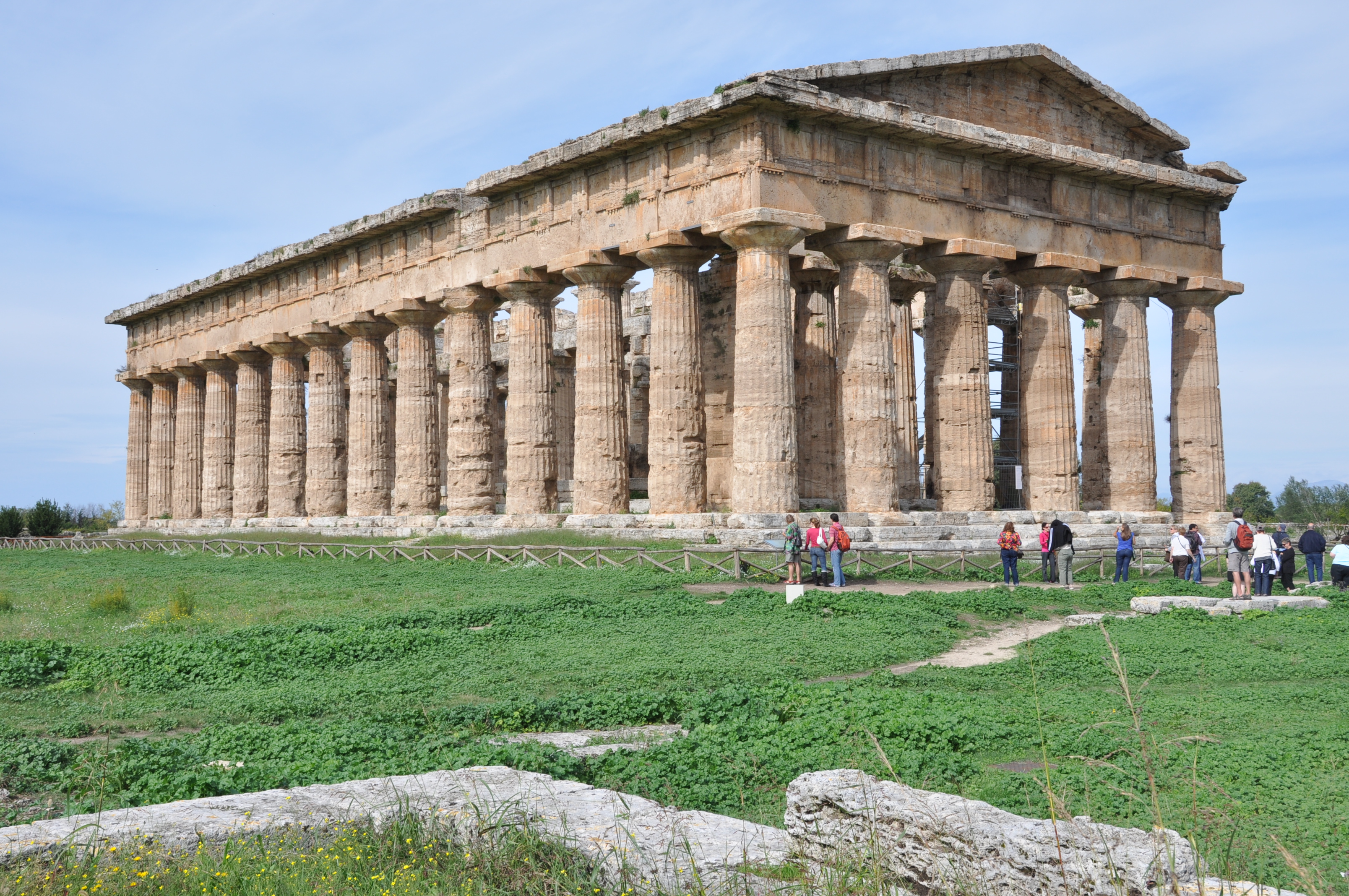
Revelation 3:12 starts "He who overcomes, I will make him a pillar in the temple of My God."

In modern archetecture that doesn't sound very exciting, but when I look at the ancient temples, pillars are pretty impressive -- even in ruins.

The roof gets to see the sky, but the pillars hold it up. Simeon got to see baby Jesus, but who taught him to be patient and faithful? You don't know his parents' names either, do you? We recall Francis of Assisi, but who taught him to listen to God?

We don't notice those "who only stand and wait," but perhaps in heaven we'll be amazed at those pillars that seem unspectacular right now.

Friday, December 26, 2025

That would be a challenge

When I unpacked the electric blanket I spent the time to read the instructions. One section ended with the protocols for returning the product, suggesting that one should use the original packaging if possible.

It was vacuum packed. I could sit on the folded blanket to try to squeeze it down to fit in the box again, but I estimate it would take 5 times my weight to match the air pressure differential it was packed with.

Wednesday, December 24, 2025

"Heaven sounds boring"

Missing out: thanks to a lack of imagination or to a hyperactive one that mistakes illusion and the temporary for something real?

Tuesday, December 23, 2025

Vanity

I have neglected some classical literature. The Vanity of Human Wishes by Samuel Johnson was suggeted to me. I'd not read anything by him that I can recall; I needed to remedy that.

But some great lines: "How Nations sink, by darling Schemes oppres’d," sounds very timely. Or "When Statutes glean the Refuse of the Sword" In context I don't believe Johnson was right. He thought the poor were less likely targets, but as Sowell quoted a sixteenth century German bishop as saying "The poor are a gold mine." Those statutes Johnson mentions don't glean much from any one of the poor, but there are so many that the income is large.

War and consequences: "And mortgag’d States their Grandsires Wreaths regret From Age to Age in everlasting Debt"

And about beauty: "Ye Nymphs of rosy Lips and radiant Eyes, Whom Pleasure keeps too busy to be wise," ... "What Care, what Rules your heedless Charms shall save, Each Nymph your Rival, and each Youth your Slave? An envious Breast with certain Mischief glows, And Slaves, the Maxim tells, are always Foes."

And I see where Austin got the phrase "Pride and Prejudice."

Thursday, December 18, 2025

Mold and radiation

You probably read about the study cultivating Cladosporium sphaerospermum on the ISS to see how this radiation-hardy--nay, radiation-using--mold would handle radiation in space.

OK, backing up. You probably read the reports that a species of black mold was happily growing in a radiation area in the Chernobyl reactor building. It not only wasn't getting (obviously) killed, it seemed to thrive better. "Melanotic fungi migrate toward radioactive sources, which appear to enhance their growth."

That led to a lot of studies of melanin and radiation. In vitro studies suggest that melanin is capable of harvesting electromagnetic energy similarly to, but less efficiently than, chlorophyll--and apparently at higher energies than chlorophyll (which absobs in red and blue bands: roughly 1.8eV and 2.8eV).

Interesting. So the experimenters put together a sealed pair of test chambers (and a duplicate to run on Earth), with two scintillators, one for each chamber, to detect radiation. (Their sensitivity peaked at about 50KeV energy deposited in some unspecified time.) Above these were petri dishes, one of which had been innoculated with mold spores. They kept them cold so the mold wouldn't start growing until they got into space, and once in space every 35 seconds they measured the temperature and the amount of the surface that turned dark with mold. The mold grew just fine. They looked at the difference between the "counts" (number of scintillator signals) in the control side and the moldy side, and found that the difference started at about 0 and grew as the mold did.

Now the difference isn't huge: about 2.6%, which, since the "shielding" was only one-sided you could double to get what the effect would be if you were surrounded by this in your spacecraft. 5% reduction would be nice, but not really worth the glowing headlines. And you can see the error bars on this. But there does seem to be an effect. The dotted lines at about 20 and 200 hours represent times when they estimated that mold had achieved 50% and 100% surface coverage. They had a camera and an algorithm...

Now even medium energy particles are going to do some damage going through creatures. I don't have any idea how a chemical could harvest medium energy photons and electrons resulting from the initial particle going through at some random angle, and suspect it isn't possible.

Low energy photons and electrons would be another matter. We have, in chlorophyll, a proof of principle that if you go low enough in energy harvesting is quite feasible. Even electrons knocked loose with low energy won't go far. But how do we get from here (e.g. MeV protons) to there (10's to 100's of eV photons)?

Researching that was a bit frustrating. The concepts are easy enough, but illustrating with examples, not so much.

At high energies, a photon interacting with matter loses energy by kicking loose electrons, and pair-producing electrons and positrons. Each of these is typically high enough energy to do the same in turn, and you get an exponentially growing number of particles up until their energies drop below the threshold for such fun and games. (And yes, the positrons eventually annihilate and produce photons.) This is all well understood, and well modeled, and I'd hoped to show the rest of the story. Unfortunately, the old standbys of Geant and EGS don't try to follow the showers all the way down.

Once you get below about 1KeV, molecular differences have a very strong effect on the outcome, and just modeling a shower in a nice uniform material like iron gets very complicated. The difference between interacting with an inner shell and an outer shell electron isn't negligible anymore.

So while I could show the cascades that happen from high or medium energy to fairly low energy, I cannot illustrate how the rest of the shower goes, as a (e.g.) 10KeV photon produces weaker photons and electrons which in turn produce less energetic ones.

Near the end of the low energy shower, an electron or photon of a few eV can excite, or perhaps even ionize, a molecule of the scintillator. When the excited electron returns to its original state the molecule produces a photon in the visible spectrum. It'll go some random direction, but if you have enough excited molecules (meaning more energy dumped into the scintillator by the incoming particles), enough of them will head in the direction of the light-sensing part to produce a signal. In really sensitive systems, all you need is one, but your noise rate goes way up, so typically you'll set your signal threshold a bit higher.

Two or three of these visible-light photons hitting your phototube (or equivalent detector) at about the same time will make a little electrical signal that you can amplify, and count if it is bigger than your threshold setting.

FWIW, layering scintillator and stuff to stimulate showers (like iron, lead, what have you), produces showers that produce amounts of light roughly proportional to the energy of the initial particle--which is very handy. Calorimetry. Anyhow, this experiment was just using scintillator in counting mode.

I'd be interested in seeing what photon energies these molds are capable of harvesting. Experiments like this subject them to a broad spectrum of energies. It's probably pretty hard to do--the tunable x-ray systems I know about are designed for radiation doses that would probably toast the molds (you can give plants too much light too).

More as I learn more...

Wednesday, December 17, 2025

Various notes

The study this morning was on Romans 4 and 5, and several rabbits got chased.

How come Adam gets the blame and not Eve? I've heard a several different explanations, which make assumptions about what was going on (Adam forgot to tell Eve the directions, Adam was standing right there, Adam was head-of-household responsible for what Eve did) that resolve into making Adam the main culprit. But if we're making assumptions, why not assume that Paul is rhetorically using the first man as a stand-in for us all, since the Romans passage goes on to say that all sin. That's been the implicit assumption in most discussion of Romans 5, might as well make it explicit.

In Romans 4:11-12 Abraham is described as the father of both the circumcised and uncircumcised believers. In 18-20 he is described as having unwavering faith that God would give him a child. If I read Genesis correctly, he, impatient, got part of that a little confused and tried a shortcut with Hagar (at Sarai's suggestion). So perhaps Abraham is also the father of those of us who believe but get things a bit confused sometimes.

Which, of course, leads into Zacharias vs Mary: "How will I know" vs "How can this be" aka "Can you show me some ID?" vs "What do I need to do?" With answers "OK, you'll be the proof" and "Nothing." Abraham might have done better to ask "How will this be?" and get details clear.

And somehow the question of whether there can be peace without freedom came up at table today. That reminded me of a famous song, which I may not be remembering entirely correctly...

The crown has made it clear
The climate must be perfect all the year

A law was made a distant moon ago here
July and August cannot be too hot
And there's a legal limit to the snow here
In Camazotz
The winter is forbidden till December
And exits March the second on the dot
By order summer lingers through September
In Camazotz

Christmas costume

The worship arts Christmas party invitation wanted us to show up in Christmas-themed, or at least winter-themed outfits. I didn't read it that closely, and wore the same sort of thing I used to wear to work.

I said that I dressed as one of the wise men.

Best choice

A puzzle showed up in my Facebook feed. Two doors. One says you get one billion dollars right now. The other says you get a dollar right now, but it doubles every day. Which do you pick?

Three ways to choose come to mind. The mathematically naive will pick the billion right now, figuring that the other would take too long to do anything useful. Somebody with a little more math, but economically naive, knows that in a month the doubling dollar will grow to be more than a billion dollars (except in Feb, where it's only 268 million or 536 million in leap years).

But the third way notices that in 40 days the value of that dollar becomes over a trillion dollars, and in 50 days each dollar will have started to lose value since there'll now be $1125 trillion to chase only $113 trillion of world GDP. A dollar will then be worth 10 cents, and in another ten days a hundredth of a cent. You can safely assume that panicked hyperinflation would cause everybody to just abandon the dollar entirely.

Or you could decide that neither selection would be good for you and be content with what you have. (Is that playing fair?)

Monday, December 15, 2025

Cell or organism-centric radiation tolerance

A while ago I proposed that the "radiation tolerant" animals inhabiting hot areas in Chernobyl would be slower-growing.

My idea was simple: radiation damage is mostly to proteins, not nuclei (tiny targets). To survive losing the use of proteins, you either need to have different ones than usual whose folded shape is stable with respect to local ionization, or you need to have spares handy. The latter is way easier to arrange, but the price you pay is that you need to actually make more of them, which takes nutrients and energy. If you spend more of your nutrition making more robust cells, you won't make them as quickly, which means the organism is slower-growing.

It occurred to me that this is a cell-centric model, which looks good for single celled organisms (e.g. molds, if you're curious what I've been reading up on recently).

One could have an organism-centric model of radiation resiliance, in which the organism "assumes" that cells are relatively disposable, and generates (and ages-out) cells more rapidly than a normal organism has to.

This too demands more nutrition and energy, but growth rates should be comparable to normal strains of the organism. The organism should need more food than normal to maintain weight -- though I suspect there'd be a lot of variance and you might need larger sample sizes for the study.

The organisms might die younger, too.

Sunday, December 14, 2025

AI cheating or not?

Althouse posted on a report that oral exams were being tested as a way of preventing students from cheating with AI.

At the university, you're paying the teachers to make some change in you: to give you a body of knowledge or a skill or a new way of looking at things.(*) Or are you paying them to certify a lie -- that you are competent at X?

I can easily imagine cases where I'm required to show competence in something that isn't germane to what I really want to learn. For example, suppose I want to master chemistry. That implies a lot of chemistry courses, some physics, and bunch of math courses and some computing: but the university wants me to take some general studies courses as well, like swimming and latin and composition. I balk at that: I don't want to be a well-rounded citizen (who doesn't accidentally drown), I just want to be a chemist.

I could be wrong about the value of those requirements. The younger and less experienced I am the more likely I am to be wrong, and my experience with college students (including myself) has not impressed me with their great wisdom. For example, that composition course is actually pretty important if I want to communicate with other chemists, or CFO's, or funding agencies.

But suppose I'm right, and Subverting the Patriarchy 101 will never be useful to me as a chemist or as a citizen. I can see the temptation to lie to the university and to make them lie on my behalf, certifying to the world that I am competent to subvert the patriarchy -- at the 101 level.

(FWIW, I missed the memo that explained why patriarchy was intrinsically worse than other models for society. It seems to have been successfully implemented everywhere.)

No. Just no. If I can't lift the pallet, I'll say so and bring in a forklift. I won't pretend I can. If I'm really no good at something, I'd like to know where my limits are. And if I have ethical objections, I'll let them know.

(*)When I checked in at the Physics Department at U of Illinois the day after moving to Champaign, I discovered that the next day was a "free shot" at the Qualifying Exam. You got 2 chances once you'd started studying, but trying before you started school didn't count if you failed. I hadn't studied anything in a couple of months, and unlike Feynman I didn't remember all the constants and formulae. One E/M problem I should have remembered the formula for, and didn't, but I did remember how to derive it. The examiners looked at each other as I scribbled on the board. I didn't pass that time. But I did have a handle on the material. Yes, oral exams... cutting edge then and now.

Wok

The subject of exercises for balance brought up The Ministry of Silly Walks. Naturally my contribution was to suggest using a bundt pan.

Talking shop

Parties with engineers or scientists seem to have points of difference with parties with musicians and singers. While some of us with technical backgrounds (e.g. managing the relay satellites around Mars for the rovers) swapped stories and discussed the use of teaching gardens, the musicians armed with a guitar and accordian were singing Russian and Ukranian songs (with a few English ones and even Je ne regrette rien) in the other room. One fellow demonstrated Russian dancing. (It looked sort of like Zorba, but what do I know?) Much livelier.

I guess we all had a good time in our own ways.

Friday, December 12, 2025

Carrington Event

There are much noisier displays out there -- about 25 years ago one home in Madison expanded their electrical service to be able to handle all the lights -- but in our neighborhood these folks are the loudest. (Yes, a lot of that is blinking.) It's a bit of a tradition -- an event -- to drive by on Carrington Drive to see what they've added this year.

Thursday, December 11, 2025

Mementos

The carving of the hut isn't very well done, but given that the sculptor didn't have all of his fingers, or good use of the rest, you can let that slide. But without knowing that this came from a leprosarium and represented the inmates efforts to support themselves, at best you'd think "An interesting tropical wood."

The place looked like other villages, though in retrospect there weren't any kids there that I noticed. We were on a tour, and had several other places to visit. This one sounded more interesting than it was. To me, anyway.

My mother bought it for me. I was a bit dubious--could one catch leprosy from an object?

I asked about the place (in Ganta, I think) a few years later, and was told it was closed. That report must have been either mistaken or temporary; it is still going.

I don't think this memento will mean much of anything, even with its story, to anybody but me. Perhaps it already served its purpose--earning a little money for a crippled sculptor.

What should come next for it? I can't imagine the kids arguing over it (wouldn't want them to anyway). It's value seems to be tied to me.

Wednesday, December 10, 2025

GPS monitoring bracelets

Just a little info about monitoring scale.

Morgan Geyser (of Slenderman fame) was under electronic monitoring in a group home when she cut off the bracelet and fled to Illinois. (FWIW, I've heard that other inmates thought she was still crazy and shouldn't have been out at all.) She is back in custody.

Geyser’s bracelet tampering alert came in at 9:38 p.m. and was placed in a queue for a staff of eight employees and two trainees on second shift, and seven employees on third shift, with an hour of overlap between the shifts, Hoy wrote. Staff first attempted to reset the monitor at 11:10 p.m.. When those efforts failed nearly 25 minutes later, staff called the group home and confirmed Geyser was no longer there.

Geyser’s tamper alarm was one of 397 alarms DOC received over three hours leading up to midnight, nearly two-thirds of which were labeled as “high-priority,” Hoy’s letter said. Any attempts to remove a monitor, such as cutting, stretching or twisting the band, trigger an alarm, as does failure to charge the device’s battery.

Emphasis is mine. That's more than one high priority alert every minute. I doubt that alerts can be resolved quickly, especially at that hour. Having 10 on duty gives you about 7 minutes each, on the average. It took an hour and a half for them to get to it.

Monday, December 08, 2025

Born and/or made

AVI linked to an essay dissecting twin studies.(*) David Bessis wrote a book (which I have not read) which sounds interesting and useful, but I suspect overclaims. "People think that it (mathematics) requires a special gift or that comprehension is a matter of genes. Yet the greatest mathematicians throughout history, from René Descartes to Alexander Grothendieck, have insisted that this is not the case. Like Albert Einstein, who famously claimed to have “no special talent,” they said that they had accomplished what they did using ordinary human doubts, weaknesses, curiosity, and imagination."

I'm not on the same level as those fellows, but I'm well better than average at math.

I only know that by comparison.

I don't feel particularly smart.

It's trivial for me to find problems that stump me. There are people who can solve those problems--and in an academic environment I meet them.

Being acutely aware that a colleague can easily deal with things that puzzle me is a ticket to imposter syndrome. I can't have the same painful awareness of the things that puzzle my colleague that I know how to deal with. Once you've solved a problem it seems easy, so the world is full of hard problems and all I solve are the easy ones.

I don't think that a researcher is always, or perhaps even often, going to be the best judge of how smart he is. An honest man or woman will be honestly humble, a member of the society of the puzzled.

Further, when you're surrounded by the best, that becomes your normal. At Princeton, Einstein didn't run into a lot of people who were no good at math.

FWIW, I suspect that most people are capable of understanding much more math than they dream. Mathematicians are born, but they need to train their minds in ways of looking at things, and with "crystallized intelligence" (standing on the shoulders of giants) even those of us who aren't great geniuses can learn how to make contributions.

I've griped before that advanced math books (and papers) often throw theorems at you without enough examples or motivation. That's not how they did the work to get there -- they played with examples, had some motivation to point them the way they did, and they did a lot of noodling around trying this approach and that.

(*) I'd always wondered how often it would happen that twins would be broken up to different homes. Among other details Bessis dug up, many of the separated twins were raised by relatives in their extended family, so their environments may not have differed that much.

Wednesday, December 03, 2025

I wonder who picked it

It wasn't yet 8 this morning. I needed a few small items and Walmart was close, with an almost-empty parking lot.

The speakers were not playing Christmas music. Yet. Possibly they have some choice what to play on the night shift, and in honor of Black Friday somebody wanted Ballroom Blitz. Or maybe it was coincidence.

Sunday, November 30, 2025

Spikes

Spicomellus had quite the dinosaur armor suit, but it never had to face spears or even swords; just teeth and claws and horns. Which admittedly are bad enough.

A youtuber asked if spiked armor (as in the fantasy pictures) was really ever used. Real examples are scarce (pickelhaube spikes were decorative and as of 1915 they were removed in combat to reduce visibility), and usually not obviously useful. Spiked shields could be handy, to snag your opponent's weapon briefly and safely away from you. Snagging your enemy's sword against your arm transfers a lot of momentum to your arm--much nicer to have it skid off smooth armor than catch, and maybe dent your armor and bruise your arm or worse. And fantasy armor spikes get in the way of moving smoothly too. And your friends might have objections.

Thursday, November 27, 2025

Remembering with gratitude

Habits of a lifetime are hard to change. I've taken health mostly for granted. As with us all, I've had some bad episodes over the years, including a few that might have turned lethal. But if I wake up and nothing hurts, I tend to forget. Even touching numb areas, or realizing that something doesn't taste right, tends to be filed automatically under "It is what it is," and without taking time to remember what might have been.

And sometimes, with so many resources, one takes time for granted too -- surely there'll be time to add this to the pile of things to read or do. After all, the resources are there. But the clock...

Count your blessings. It'll keep me busy for a while.

Wednesday, November 26, 2025

Black Friday

so soon after Thanksgiving, demonstrates that we are thankful but not content.

Monday, November 24, 2025

Hiding the key to knowledge

Following up on the thoughts about "explaining away" God's rules, it struck me that sometimes there isn't a really good alternative.

Take, for example, charging interest. Exodus and Deuteronomy forbid charging interest to one of your people, especially the poor.

On the other hand, in purely civil terms it makes good economic sense to allow the charging of rent for the use of your property -- you are deprived of the use of it for a while and ought to be compensated. And experience shows that if you forbid charging any interest, either the supply of loans dries up or people develop workarounds.

What kind of workarounds? Well, you can redefine usury to mean "extortionate charges." After all, Jesus' parable of the talents doesn't condemn earning interest, so maybe only excessive interest is meant, despite the Torah text.

Or you can get picky and say it only applies to insiders, but of outsiders you may exact what you choose. This doesn't seem just.

You can buy a nominal item from the lender for cash and arrange to sell it back later for more money. Legal fiction

You can pay a commission proportional to the amount borrowed that varies with the length of time you need the money. Legal fiction

Distinguish between loans for investment and loans for consumption: the former being activity which should bring a return that the borrower can easily pay the lender from--and therefore not predatory. Splitting hairs, but maybe supportable

And so on. Some of these are Muslim inventions, and some more universal. The point is that an activity which is apparently forbidden sometimes has to happen in some way whether forbidden or not--and not in order to break any other commandments, just to manage ordinary buying and selling. (If you are among those who believe ordinary buying and selling is evil, please remember that attempts to forbid this have been some of the most calamitous experiments in history. Whatever evil you hope to stop that way, starving people is worse.)

Killing people is bad, and murder is forbidden, but sometimes there's war, or self-defense, or just having to kill a fellow villager who has proved dangerous to the community and who won't stay away. I've known some thoroughgoing pacifists, and been very grateful that they were not in charge of anything. But what shall the church say? That war is good? (a lie) Or that because war is bad you must never kill? (not obviously true, and has very bad effects; scripture seems to show an implicit duty to defend) Or that war is bad but the church would exceed its mandate if it told you what to do? (you really don't want the state to be supreme). Or that it is only permissible when God's prophets endorse it? (which are which?)

Or perhaps that killing is bad and you'd better never get comfortable with it, even when it is necessary? And pray that God will understand. (My own view is that although Cortez will have a lot to answer for at the Judgment, he'll at least be able to say that he helped destroy the Aztec empire. However, I'm not God; weight my view accordingly.)

Consider the giving of alms. I know from observation that if I give cash to X, he'll use it to give grief later as a "drunk and disorderly." Do I follow the plain command and give when he asks, or assume some kindness to my neighbors, or perhaps even responsibility for X, and decline or perhaps just give on my terms (e.g. food)? The Didache (first century church document) says "Let your alms sweat in your hands, until you know to whom you should give." That seems to suggest a bit of discernment is advisable, though in context there's no other hint of it--though in any event it expects a generous spirit. (and warns of judgment on beggars who don't need the alms!)

Do I owe more to the immediate request of X for money, or to his wife and the likely (though never entirely certain) result of X's use of the money?

How much of this is muddying the waters? Is it a council of despair to say that sometimes there are no good choices and we will have to answer for whichever of them we choose? That's a dangerous claim, since there almost always are good choices, and we tend to jump at loopholes and excuses. Which makes "sometimes no good choices" an easy way to muddy the waters and hide the key to knowledge.

Music hath charms

When I saw the BBC article on music calming dogs (classical was better), I immediately thought of this: of course. That wouldn't count, though--"Slow tempo (50-60 beats per minute or less), simple compositions with low or no percussive elements are best."
Audiobooks might sound like they'd calm pets, especially with a soothing-voiced narrator, but the theory doesn't hold up in practice. A study Wells co-authored in 2022, which observed the reactions of 60 dogs to either classical music or audiobooks while their owners were briefly absent, found that audiobooks had little to no calming effect. Rather than sit or lie down as they did while listening to the music, most would just stare at the speaker emitting the audiobook recording.

They emphasized that there was a lot of variation, and your mileage with your pet might vary.

Sunday, November 23, 2025

A rascal in the house

BBC ran a story suggesting that raccoons were, in trying to use human territory and human trash, at least partly domesticating themselves. I assume that this "self-domestication" wouldn't work quite the same way for prey animals like rats, but they report that urban raccoons have shorter snouts than wild ones, similar to changes in domesticated cats and dogs -- and foxes.

I read Rascal too (no, I haven't been to the museum), and I can imagine some of the issues that might arise with a housepet with curiosity and hands, but trying to breed a tame raccoon sounds like an interesting project. For somebody younger than me.

I wonder what besides tameness you might want to try to breed for.

For that matter, imagine breeding monkeys for tameness. And rather importantly, ability to be housebroken. How long before your indoor pet figured out how to feel his way to opening those cheap combination locks. I assume childproof latches would be a peice of cake.

You may say that I'm a dreamer... but maybe just bats.

Build their tombs

The sermon was on Luke 11's woes this morning. The preacher missed a bet and didn't explain what the lawyers were--expert theologians. I made a mental note to remind him of that for his second sermon.

I'd always found Jesus' comment to be a bit of a non-sequitur: "So you are witnesses and approve the deeds of your fathers; because it was they who killed them and you build their tombs."

Burying the dead was a mitzvah, an act of true kindness (unrepayable), that even the high priest was obligated to do if nobody else was around.

But thinking of the lawyers as professional theologians made it click. Their ancestors didn't care for the prophets' messages, so they killed them. The lawyers made sure to carefully reinterpret the messages to make them harmless--bottle them up. Burying the dead is not the same as building a big tomb to hide them behind. We've seen tombs and mausoleums impressive enough to make us forget who it was supposed to remind us of.

The last woe ties in with this interpretation: "you have taken away the key of knowledge." Obscuring the spirit of the law with details, or an "explanation" of why it doesn't mean what it says seems like a good way to do that. And Jesus called out an example of that elsewhere: something dedicated to God (corban), even if the actual gift was delayed and you still enjoyed beneficial use of it, could not be used to take care of your parents, despite the explicit command.

Of course a more usual take also works to explain the last woe: "the fear of the Lord is the beginning of wisdom" = key of knowledge, and piling up a heap of human rules can obscure the "fear of the Lord."

Applications... It's no trouble at all to find theologians adept at justifying the unjustifiable. Are there hard passages I gloss over? Or at least don't think too much about? Um, yes. I'm guessing that those need more listening, even if my applications don't change.

Thursday, November 20, 2025

A little lack of planning

A fire at Liberia pavilion at the COP30 meeting in Brazil may be due to a bit of confusion. Liberia uses both 110 and 220 systems, sometimes in the same building.(*)
The Liberian Pavilion had reportedly been dealing with electrical challenges since the opening of the conference due to a mismatch between the 220 volt wiring used in the pavilion and the 110 volt wiring standard across the broader facility, according to the source.

According to the source, several devices brought in by the Liberian delegation had burned out earlier in the week after being plugged in, prompting them to purchase step-down equipment to manage the voltage difference.


(*) Upstairs was 110, downstairs 220, and the exact same style of outlet (American 2-prong) was used in both. When the manager's son innocently loaned the downstairs tenants a replacement microwave, the magic smoke came out and they had to come borrow the use of ours (upstairs).

Wednesday, November 19, 2025

Early thoughts

from Romans 2

"Judgment" is a bit ambiguous. What's its purpose? Condemnation, or "Houston, we've had a problem"? It's a lot easier to notice a problem and take warning than to evaluate all the details. I have to apply some judgment, enough for my needs and responsibilities (Is that guy likely to prove a threat? Would she be a good teacher?), but more than that may be encroaching on God's turf.

Romans 2:7 and 2:8 both describe people who persevere--clear cut "trying to be good" and "trying to be bad". Judging the lazy is a bit messier. Though there's always Laodicea.

We don't go in a lot for gnostic "special knowledge needed for true salvation" explicitly, but we seem to emphasize classes more than practice. Of course it's easier to get people to show up for most sessions of a class than to scrape together a snow-shoveling crew of the able-bodied (who have to get to work or school too). But "render to each person according to his deeds" suggests that maybe taking class notes isn't quite all that's required.

Judgment for all, for the Jew first and then the Greek. The order seems to reflect who got the explicit revelations from God, and from whom more is expected. If so, Christians, following the revelation of the living Word, seem likely to be first in line now.

Tuesday, November 18, 2025

Orientation and surgery

Typically if someone touches me I can touch the same spot in the same way without looking.

But when the OT was showing me how to manipulate neck skin to try to mobilize scar tissue and get lymph moving, I found that I had to touch her fingers to find the spot. Something about some nerves gone, and some nerves not running in precisely the same locations, left me a bit offset.

Not serious or life-changing, just an oddity nobody mentioned.

Saturday, November 15, 2025

UBC

I wonder what they teach reporters to do

University Baptist Church closed last month, and the Good Samaritan House declined the building. The Daily Egyptian's report, despite the headline, is mostly about the future use of the building, and includes several textual curiousities: "The sanctuary was filled with several emotional congregants", and the pastor is called "John Annabelle" while the sign outside says "John Annable."

I wonder where the plaque with the names of the founding members will end up.

When I was there, by and large professors went to UBC and students (or at least the cool kids) went to a different church. I don't know if that was to avoid the appearance of evil, or if mutual forgiveness might be an issue--or if it was just the fashion of the moment.

Tuesday, November 11, 2025

Thursday, November 06, 2025

A business by any other name

"Killer Mane Salon"

No, Medusa is not on their web page.

Sunday, November 02, 2025

Kingdom come

The sermon today was on Luke 11:1-13, which begins with a shorter version of the Lord's Prayer and ends with "If you then, being evil, know how to give good gifts to your children, how much more will your heavenly Father give the Holy Spirit to those who ask Him?"

One obvious question is "Where in the Lord's Prayer does one ask for the gift of the Holy Spirit?"

I wonder if it comes from basileia: "bas-il-i'-ah; from G935; properly, royalty, i.e. (abstractly) rule, or (concretely) a realm (literally or figuratively):—kingdom, + reign." If the word means kingship, and the invitation is implicitly for that to come beginning with us, then perhaps that part of the request is for God's kingship to be in us. If so, thanks to God's simplicity, that's a request for God to be in us.

Yes, I know Matthew has something a bit different.

Side effects

One side effect of losing weight thanks to the problems of this past year is that one doesn't have as much personal insulation to face November with.