Friday, June 29, 2018

More Chesterton

And in precisely the same fashion a poet must, by the nature of things, be conventional. Unless he is describing an emotion which others share with him, his labours will be utterly in vain. If a poet really had an original emotion; if, for example, a poet suddenly fell in love with the buffers of a railway train, it would take him considerably more time than his allotted three-score years and ten to communicate his feelings.

and

Poetry deals with primal and conventional things--the hunger for bread, the love of woman, the love of children, the desire for immortal life. If men really had new sentiments, poetry could not deal with them. If, let us say, a man did not feel a bitter craving to eat bread; but did, by way of substitute, feel a fresh, original craving to eat brass fenders or mahogany tables, poetry could not express him. If a man, instead of falling in love with a woman, fell in love with a fossil or a sea anemone, poetry could not express him. Poetry can only express what is original in one sense--the sense in which we speak of original sin. It is original, not in the paltry sense of being new, but in the deeper sense of being old; it is original in the sense that it deals with origins.

and

It is only the smaller poet who sees the poetry of revolt, of isolation, of disagreement; the larger poet sees the poetry of those great agreements which constitute the romantic achievement of civilisation.

and

When a lady in Italy said, on an occasion when Browning stayed behind with his wife on the day of a picnic, that he was "the only man who behaved like a Christian to his wife," Browning was elated to an almost infantile degree. But there could scarcely be a better test of the essential manliness and decency of a man than this test of his vanities. Browning boasted of being domesticated; there are half a hundred men everywhere who would be inclined to boast of not being domesticated. Bad men are almost without exception conceited, but they are commonly conceited of their defects.

and

Humanitarians of a material and dogmatic type, the philanthropists and the professional reformers go to look for humanity in remote places and in huge statistics. Humanitarians of a more vivid type, the Bohemian artists, go to look for humanity in thieves' kitchens and the studios of the Quartier Latin. But humanitarians of the highest type, the great poets and philosophers, do not go to look for humanity at all. For them alone among all men the nearest drawing-room is full of humanity, and even their own families are human. Shakespeare ended his life by buying a house in his own native town and talking to the townsmen.

and

Prejudice, in fact, is not so much the great intellectual sin as a thing which we may call, to coin a word, "postjudice," not the bias before the fair trial, but the bias that remains afterwards.

and

But there are, when all is said and done, some things which a fifth-rate painter knows which a first-rate art critic does not know; there are some things which a sixth-rate organist knows which a first-rate judge of music does not know.

and

A man must love a thing very much if he not only practises it without any hope of fame or money, but even practises it without any hope of doing it well. Such a man must love the toils of the work more than any other man can love the rewards of it.


Despotism

Despotism indeed, and attempts at despotism, like that of Strafford, are a kind of disease of public spirit. They represent, as it were, the drunkenness of responsibility. It is when men begin to grow desperate in their love for the people, when they are overwhelmed with the difficulties and blunders of humanity, that they fall back upon a wild desire to manage everything themselves. Their faith in themselves is only a disillusionment with mankind. They are in that most dreadful position, dreadful alike in personal and public affairs--the position of the man who has lost faith and not lost love.

This belief that all would go right if we could only get the strings into our own hands is a fallacy almost without exception, but nobody can justly say that it is not public-spirited. The sin and sorrow of despotism is not that it does not love men, but that it loves them too much and trusts them too little. Therefore from age to age in history arise these great despotic dreamers, whether they be Royalists or Imperialists or even Socialists, who have at root this idea, that the world would enter into rest if it went their way and forswore altogether the right of going its own way. When a man begins to think that the grass will not grow at night unless he lies awake to watch it, he generally ends either in an asylum or on the throne of an Emperor.

and

A Liberal may be defined approximately as a man who, if he could by waving his hand in a dark room, stop the mouths of all the deceivers of mankind for ever, would not wave his hand.

Somebody didn't get the memo.

I think in the first paragraph Chesterton is writing about people who support the despotism--likely enough the wolves at the top got there because they don't care for anyone but themselves. But you know rank and file people just like those he describes, don't you?

Browning's father

Chesterton wrote an interesting biography of Robert Browning. There you may find:
In early life Robert Browning senior was placed by his father (who was apparently a father of a somewhat primitive, not to say barbaric, type) in an important commercial position in the West Indies. He threw up the position however, because it involved him in some recognition of slavery. Whereupon his unique parent, in a transport of rage, not only disinherited him and flung him out of doors, but by a superb stroke of humour, which stands alone in the records of parental ingenuity, sent him in a bill for the cost of his education. About the same time that he was suffering for his moral sensibility he was also disturbed about religious matters, and he completed his severance from his father by joining a dissenting sect. He was, in short, a very typical example of the serious middle-class man of the Wilberforce period, a man to whom duty was all in all, and who would revolutionise an empire or a continent for the satisfaction of a single moral scruple.

and

Robert Browning senior destroyed all his fortunes in order to protest against black slavery; white slavery may be, as later economists tell us, a thing infinitely worse, but not many men destroy their fortunes in order to protest against it. The ideals of the men of that period appear to us very unattractive; to them duty was a kind of chilly sentiment. But when we think what they did with those cold ideals, we can scarcely feel so superior. They uprooted the enormous Upas of slavery, the tree that was literally as old as the race of man. They altered the whole face of Europe with their deductive fancies. We have ideals that are really better, ideals of passion, of mysticism, of a sense of the youth and adventurousness of the earth; but it will be well for us if we achieve as much by our frenzy as they did by their delicacies. It scarcely seems as if we were as robust in our very robustness as they were robust in their sensibility.

I suspect if he were writing today, Chesterton might be a little less flattering about our ideals. One of our ideals is that revolution is a proof of a good change.

Saturday, June 23, 2018

Bighorn

We drove 16 to Ten Sleeps. The weather cooperated (not so much for the folks camping next to us who went to Shell Falls), and the scenery and the details were beautiful. Except for the descent/ascent at the west end--I'm a flatlander with a white knuckle dislike of heights. And, now that I think of it, the minivan ran a bit hot too--I don't think it likes steep grades.

We arrived at one lookout in time to see a man dash across the road and up the scrubby hill chasing a dachshund. The dog is 14 and supposedly blind, but she saw a marmot on the hill and took off after it. The man pulled her out of the marmot's hole. The breed was bred for that...

Most places the deer crossing sign shows a white-tail leaping. Here it depicts an elk standing as though it owns the road.

The cattle drive really owns the road, though. We passed a woman by a pickup at the side of the road who was waving an orange flag about; she nodded at us, we waved back, and wondered what she was trying to do. Around the curve about 300 cows and calves trotted loosely in our direction, with a line of cars backed up behind them. Several mounted cowboys and a fast little dog tried to keep the cows going more or less down the road.

There are even more large pickups on the road than RVs (most pulled by pickups themselves).

Cruise control isn't very useful in the Bighorns either. Dangerous would be a better description. And, maybe you can use your brakes to manage one downhill 8% grade, but don't risk it for more than one. My Better Half took lots of pictures while things cooled down.

Friday, June 22, 2018

Memorials

The reenactment of Custer's last stand was rained out--too wet for people and probably dangerous for the horses--so we went to the Little Bighorn Battlefield National Monument instead. That was pretty wet too, but we didn't have to gallop uphill. The white tombstones on the hill and through the valley were evocative--but incomplete. They haven't put any in the ravine. And, it turns out, when the Feds sent the monuments sent to be installed they included some for another battlefield. Many markers are in pairs, but the archaeologists usually found evidence of at most one burial. They suspect that the bodies were covered, not buried, by scooping the loose dirt on top--and sometimes they scooped from both sides, leaving a depression on each side. When the markers went in, they went in by the depressions. And since there were too many markers sent, nobody noticed at the time. Duplicate markers cannot be removed, since they are now historical in their own right.

On a hill close to the cavalry's monument is a monument to the Indians who fought--it includes a list of all the warriors. (Some names have a lost story somewhere: "Not Good for Anything.") This monument tells the Sioux side (including a quotation from Custer promising he would never shoot at gun at them again) and celebrates their fight for their way of life.

The monuments celebrate courage and faithfulness.(*) On a rainy Friday morning it was crowded, and the docents were busy.


(*) Hmm. Maybe we could do something like that with the American Civil War? Do you think people would go for not just having monuments for the heroes of the winning side, but monuments for the heroes of the losing side as well--putting it all behind us and celebrating courage?

Thursday, June 21, 2018

Fat

We consume amusements with such dedication that the only word for it is gluttony.

Traditional gluttony leaves you pretty fat and slow (Shut up, mirror!). Amusement gluttony does too--when was the last time you heard somebody singing or whistling for themselves, outside a choir? (Singing along to the radio counts.) Acting for fun at parties--even charades? (LARPing counts.) Does the correlation between Facebook use and loneliness involve a vicious circle?

I do sing along to the radio sometimes. Without autotuning.

Sunday, June 17, 2018

Planning

Toiling, rejoicing, sorrowing,
so I my life conduct.
Each morning see some task begun,
each evening see it chucked.

You can probably identify who I was reading last night within two guesses.

If you have the chance to see Ashfall Fossil Beds, do. I would not make a trip out west just to see it, but it is worth a detour. The ash from the eruption didn't kill everything at once--some of the creatures lived for weeks. (The final bursts piled another 4-6 feet of ash on top. At least I think there was more than one--or else continuous ash fall for months.) The predators, not having to stuff their noses into dust to eat, outlived everybody else.

Snakes crawl into the digging pits in the Hubbard Rhino Barn at night, and they must be escorted out before the day's excavations begin.

Friday, June 15, 2018

Wyoming

We're riding off into the sunset for a few days. Not much internet, but I don't expect drastic withdrawal symptoms.

Sunday, June 10, 2018

Tempting fate

I put the snow shovel back into storage yesterday.

Now that I think of it, I could use the snow shovel for getting the maple "helicopter" seed piles off the driveway.

Thursday, June 07, 2018

Bright idea

Those who manage computer servers know that you can tell the machine to blink a light for a particular disk or sometimes for a particular controller, so that when you yank the defective item you get the correct one.

I was helping with some cable tracing yesterday.

You are familiar with those LED cable lights that turn from color to color to color.

They'd be an extra-cost item, but imagine a network cable that was twinned with such an LED strand, so that you could tell the server to turn the light on and find out where the cable went.

If that doesn't seem obviously wonderful, look at this and remember that the cable run started out nice and neat, but over the years replacements make it look just a little different.


Of course, by the time you realized that you really needed such an item, it would be too late to install it. There's probably a theorem to prove that whichever cable you really need to trace is going to spend at least part of its length at the bottom of the pile. I can count the exceptions on my thumbs.

Saturday, June 02, 2018

Time to rest

Over at Real Clear Science Gottschalk recaps some of his book about the acceleration of life and how it is harming us. He notes that "many spiritual and philosophical systems Buddhism, for example, suggest that detaching from daily concerns and spending time in simple reflection and contemplation are essential." This shows a curious allergy to Judaism and Christianity, which are explicit about a day of rest. I suppose the exotic, being more distant, is less demanding if it turns out to be true.

"Acceleration" is a bit more generic than the usual "over-work," since it includes also the unproductive time spent "keeping up with things" on the net. "Keeping up" isn't anywhere near leisure--we treat it as urgent and therefore stressful, but by and large there's little we have do about the things we "keep up" with, and there's nothing we can show for the time we spent--it trends "dissatisfying."

I just spent an hour. I started out researching pressure air hose fittings (my hose broke), but when I was done I didn't stay done...

Monday, May 28, 2018

"It is time for"

Back in '08 I heard it claimed that we should all vote for Obama because "it is time for a black man to be president." To be as kind as possible, this is not rigorously persuasive. Similar claims abounded in '16--though I suspect these were only persuasive to the already-decided.

But under what conditions does "it is time for group X to have a representative as leader" become a persuasive argument?

The most obvious case is when the office is purely honorary, and we assign it to this or that person in turn, in recognition of their accomplishments or those of the group we call on them to represent. Legislators spend a little time on school children's proposals to designate state birds, state landforms, and so on. It's part of teaching kids how government works. The outcome doesn't matter--if every state has vanilla as its state ice cream flavor, maybe it's the turn of butter pecan.

I'm not sure this is the case with the US President. Plenty of power still inheres in the office, despite the vast unaccountable bureaucracy that never stops growing. Discard this case.

With that option out of the way we come to grimmer prospect. If we rule out "it doesn't make a difference" we're left with "it makes a difference." That difference can be symbolic or substantive.

If it is symbolic, and is only done for encouragement, this implies three presuppositions--actually four.

  1. Said group regards itself as distinct from the rest.
  2. It needs encouragement.
  3. The symbol will effectively encourage.
  4. And that there is no plausible way for any of the selected group to achive that position on their own.

That sounds a bit patronizing. And notice that all four requirements are necessary but not sufficient--there can be any number of reasons why is is useful but not time right now.

On the other hand, if simple use of a symbol is going to be effective, whatever it may be that seems to separate the group must not be very dire. That can argue for or against using the symbol: "it isn't badly needed" vs "easy to fix."

The other option--that the difference is substantive--represents a very bad situation.

It means that the interests of the different groups are substantively different, and that members of one group cannot be trusted to respect the interests of any other. The reason it is the "turn" of group X is that without their turn in power they will be oppressed, and may turn violent. You can easily find examples of this sort of thing in multi-ethnic governments. Lebanon worried along with a system in which different ethnicities were assigned different positions in government--because without such a balance of power they tried to kill each other. BTW, the system broke down.

Is that what you want to say we have? Not e pluribus unum, but warring tribes? If warring tribes is what we have, that's what we have, and we must deal with it. Ugly compromises will have to be made--the US Constitution includes a few (and a clever one--the Electoral College).

I want "e pluribus unum." I want "neither Jew nor Greek." I want us "all in this together." But if we've gotten too big to hold together, I want some clarity in the discussion.

Sunday, May 27, 2018

Entertainments and pleasures

From Utopia of Usurers
Every religion, apart from open devil worship, must appeal to a virtue or the pretence of a virtue. But a virtue, generally speaking, does some good to everybody. It is therefore necessary to distinguish among the people it was meant to benefit those whom it does benefit. Modern broad-mindedness benefits the rich; and benefits nobody else. It was meant to benefit the rich; and meant to benefit nobody else. And if you think this unwarranted, I will put before you one plain question. There are some pleasures of the poor that may also mean profits for the rich: there are other pleasures of the poor which cannot mean profits for the rich? Watch this one contrast, and you will watch the whole creation of a careful slavery.

and

A house with a decent fire and a full pantry would be a better house to make a chair or mend a clock in, even from the customer’s point of view, than a hovel with a leaky roof and a cold hearth. But a house with a decent fire and a full pantry would also be a better house in which to refuse to make a chair or mend a clock—a much better house to do nothing in—and doing nothing is sometimes one of the highest of the duties of man.

Even the "free" pleasure of surfing the net demands some money for a machine and a network connection. The free pleasure of singing or whistling to yourself seems to be little-exercised.

Of course "doing nothing," while it may be a high duty, is also a chore magnet.


I have never understood why Satanism gets to be classified as a religion, when it is by construction an anti-religion.

Teenage money

During a conversation with my Better Half, she suggested that the 50's and 60's had a sea change in entertainment, teenagers had money and entertainers were eager to flatter them.

Which led me to wonder: where did they get their money? From the number of economic illiterates who litter this county I incline to a sneaking suspicion many just got it from their parents' miraculous money well, but apparently the same sort of confusion was popular back in the 20's and 30's.

Some teenage money was earned, but at least since the 70's that's been dropping assuming the years selected are representative: from 1974 to 2014 the proportion of teenagers with a summer job dropped from about 57% to about 33%--a bit over 40% decline. I'd like to know what it looked like from the postwar era on--I'd be interested in seeing if it rose. Since a lot of students didn't finish high school, I'd think it started pretty high--the graph at the link mixes students and the self-supporting.

It may be hard to tease out the information--maybe the details exists for married vs unmarried teenage employment. Before I go diving, does anybody know an easy place to find out?

(I think the decline in summer jobs is terrible. Education isn't just sitting through classes and taking tests.)

Hindu musing

In irrelevant reading I found that a woman interested in becoming a Hindu was told that her best chance was to be reincarnated as a Dalit.

Yes, I thought that rather odd. This popped up as the first reference. Executive summary: some experts say you can convert, but probably you can't, and you are going to have the caste you inherited. Details of belief may vary, but caste is cast in stone.

We know the obvious conflicts between Christian and Hindu doctrine--their claims cannot both be true. Jesus said that the one who would be greatest must be the servant of all. That would be the Dalits. Christianity stands their caste system on its head. I'm imagining a Brahmin hoping to be reincarnated as an Untouchable...

Brat Fest

I've worked in the Madison area (with a year and a half stationed in Illinois) for 33 years and never been to the world's largest brat fest.. I'm not a huge fan of crowds and over-amped bands. Or 92 degree heat.

But someone locked keys inside the van, so as long as I was there already...

The battling bands had their speakers oriented to not interfere with each other much: somebody has been planning well. The centerpiece is the brat tent (well, for a lot of people the centerpieces were the beer tents), which was wide and 2-sided and quite fast: 30 seconds of being in line and 10 seconds to buy and I was headed to the condiment tent. I had my choice of celebrity cashiers: a local NPR radio personality, Miss Wisconsin, or a middle school teacher. (I went with the teacher.)

Just like any fair, there was a midway, and there were booths for this and that, and kid crafts and a petting zoo, and a pond to watch birds by, and a horse show (aren't fairs like that where you live?). And, in honor of Memorial Day, they had a subset of the Vietnam memorial with pictures of Wisconsin soldiers who had died in the war.

At 92 degrees it wasn't crowded at all.

Maybe in another 33 years I'll go to State Street Halloween.

Tuesday, May 22, 2018

Splashing is complicated

But it looks like some MIT engineers may have found one of the keys to understanding droplet formation. Jerk matters.

For some reason this reminds me a bit of the oddity with bubbles: with a bubble on each end of a straw, the pressure is lower inside the bigger bubble, so it grows and the smaller shrinks.

Patrons

I wondered who would be the best patron saint of computers or of computer managers. For the latter, I figured St. Barbara(*), although St. Dymphna was plausible too.

It turns out that somebody already worked it out: A scholar named St. Isidore is supposed to be the patron of computers and maybe the internet too.


(*) Patron of artillery men and mathematicians (?). If you wonder how this applies to computers, think of this: I often do.

P-38

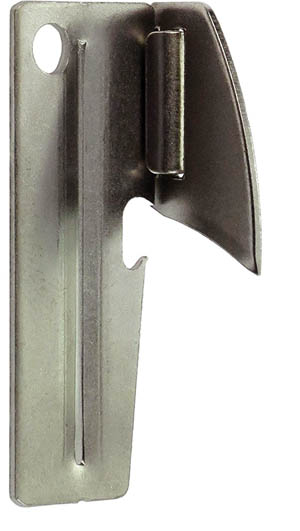
On the topic of simple things: Read about the history of the "Opener, Can, Hand, Folding, Type I".


"In a pinch it might be used as a screwdriver to help field strip a weapon, cut seams on a uniform, or scrape mess kits clean. To accomplish a mission it could strike flint, measure inches, strip wire, deflate tires, adjust a carburetor, or pick inside a wound. Need a box cutter, marking tool, or decorations on a makeshift Christmas tree?"

The article claims that it was not named after the airplane, and that some suspect that it and its bigger "also-not-named-after-an-airplane" brother the P-51 were named after the number of squeezes needed to open a can. I humbly submit that it probably was named in honor of the plane, especially given the second name. Looked at from the side by a child or a tipsy adult, the tool has an airplane look to it. I have a mental picture of a couple of little boys playing zoom zoom airplane with prototypes that daddy brought home from work.

Friday, May 18, 2018

Until you see the whites of their eyes

The group photo had us standing on the hill and looking down at the cameraman. He had a clever idea: "Close your eyes and open them when my countdown reaches 1". He wanted to cut down on blinking. It was not 100% successful.

Dark eyes everywhere.